
Ladakh
Bare mountains, Buddhist monasteries and high blue lakes make Ladakh, in the high Himalaya of India, one of the most distinctive places to travel in the subcontinent.
Ladakh is a high, dry land of bare mountains, Buddhist monasteries and green villages strung along the Indus, a Union Territory of India in the high Himalaya. This Ladakh travel guide covers the best things to do in Ladakh, from the old town of Leh and its hilltop gompas to the Nubra Valley and the long blue lake of Pangong Tso, along with the best time to visit Ladakh and how to plan for the altitude.
Why visit Ladakh?
Few places in India feel as different as Ladakh. The landscape is a high-altitude desert, with brown and ochre slopes, snow on the peaks and sudden strips of barley fields and poplars wherever there is water. Prayer flags snap in the wind on every pass, and whitewashed stupas line the roads.
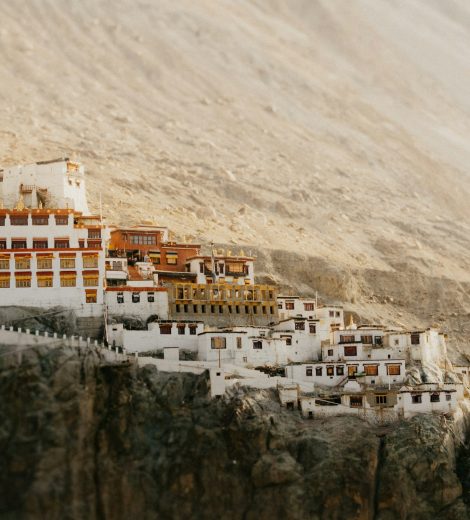
The culture is closely linked to Tibetan Buddhism. Monasteries perch on ridges above the valleys, many of them centuries old, with painted assembly halls, butter lamps and morning prayers you can often sit in on quietly. Ladakhi homes are built of mud brick and timber, and a cup of butter tea or a bowl of thukpa noodle soup is a common welcome.
Things to do in Ladakh
Leh: the old town, palace and Shanti Stupa
Leh, the main town, sits at around 3,500 metres and is where almost every trip begins. Above the old quarter rises Leh Palace, a former royal residence of nine storeys built in a style that recalls the Potala in Lhasa. Wander the old town lanes below it, then climb to the white Shanti Stupa at sunset for a view across the valley to the Stok range. Keep your first day or two in Leh gentle while your body adjusts.
Thiksey, Hemis and the monasteries of the Indus Valley
South-east of Leh, the Indus Valley holds some of the best-known monasteries in the region. Thiksey climbs a hillside in tiers of white buildings and is a good place to watch early morning prayers. Hemis, tucked into a side valley, is one of the largest and wealthiest monasteries in Ladakh and hosts a well-known masked dance festival in summer, with the date set by the Tibetan calendar.
Alchi, Likir and the road west
West of Leh, the road follows the Indus past the confluence with the Zanskar river, where the two rivers meet in different colours. Alchi is known for its very old temple murals and carvings, painted in a style quite unlike the later monasteries. Likir and the dramatic setting of Lamayuru, above eroded hills often called the moonland, make this a rewarding day or overnight trip.
Nubra Valley and Diskit
North of Leh, the road climbs over the high Khardung La pass and drops into the Nubra Valley, a wide valley of sand, scrub and villages where the Shyok and Nubra rivers meet. Diskit Monastery looks out over the valley, with a large statue of Maitreya Buddha nearby. Near Hunder there are sand dunes where you can see, and ride, double-humped Bactrian camels. Most people spend one or two nights here; the valley is lower than Leh, which many find a relief.
Pangong Tso
Pangong Tso is a long, narrow lake at around 4,200 metres, ringed by bare mountains. Its colour changes through the day from deep blue to turquoise and green as the light shifts. The drive from Leh takes about five hours and crosses another high pass. You can visit on a long day trip, but staying a night in a simple camp or guesthouse by the shore lets you see the lake at sunrise and sunset, when it is at its most beautiful. Nights here are cold even in summer.
Altitude and acclimatisation
Altitude is the most important thing to plan for in Ladakh. You arrive in Leh at around 3,500 metres, and many passes and lakes are higher still. If you fly in, plan at least two full rest days in Leh before any excursion: walk slowly, drink plenty of water, avoid alcohol and sleep well. Only then head over the high passes to Nubra or Pangong. Arriving by road from Manali or Srinagar helps you adjust gradually, though the journey itself is long.
Mild headaches and breathlessness are common at first. If symptoms get worse, rest and descend if needed. Speak to a doctor before you travel if you have any health concerns, and ask about altitude medication.
Permits
Some areas of Ladakh, including parts of the Nubra Valley and Pangong Tso, are protected areas that require a permit for visitors. The rules differ for Indian and foreign nationals and change from time to time, so we arrange the permits and confirm the current requirements when we book your trip.
Best time to visit Ladakh
The main season runs from June to September, when the roads over the passes are open, days are warm and sunny, and the monasteries hold their summer festivals. Ladakh lies in the rain shadow of the Himalaya, so it stays mostly dry while much of India has the monsoon. May and early October are quieter, with colder nights. Winter is very cold, and many roads and camps close.
| Months | What to expect | Best for |
|---|---|---|
| June to September | Sunny, warm days and cool nights; high passes and roads open | Monasteries, Nubra Valley, Pangong Tso, festivals, trekking |
| May and October | Fewer visitors, crisp days, cold nights; some passes can see snow | Leh and the Indus Valley, quieter monasteries, autumn colour in October |
| November to April | Deep winter, well below freezing; many roads, camps and hotels closed | Experienced winter travellers; very limited touring |
How long to stay and how it fits a trip
Allow at least seven days for Ladakh, and more if you can. That gives you two rest days in Leh, a day or two for the Indus Valley monasteries, two nights in the Nubra Valley and a night at Pangong Tso.
- 7 days: Leh and acclimatisation, Thiksey and Hemis, Nubra Valley and Diskit, and a long day or one night at Pangong Tso.
- 9 to 10 days: add Alchi, Likir and Lamayuru to the west, a night in a village homestay and a slower pace between the high passes.
- Longer: add a trek or arrive overland, gaining altitude more slowly on the way.
The quickest way in is a flight from Delhi to Leh, which takes about an hour and a half and passes over the main Himalayan range. In summer, roads also link Leh with Manali and with Srinagar, each a journey of about two days with an overnight stop. Ladakh pairs well with time in Delhi and the classic sights of Agra and Jaipur, or with Varanasi for a contrast of mountain and river.
Tips for visiting Ladakh
- Dress modestly at monasteries, remove shoes before entering prayer halls and walk clockwise around stupas and prayer wheels.
- Ask before photographing monks or people, and check whether photography is allowed inside each temple.
- Pack layers, a warm jacket, a sun hat, sunglasses and strong sun cream: the sun is fierce at altitude.
- Carry a reusable bottle. Water is precious here, and plastic waste is a growing problem.
Highlights
- Sunset over Leh and the Stok range from the Shanti Stupa
- Morning prayers at Thiksey Monastery above the Indus
- Hemis Monastery and its summer masked dance festival
- The old murals and carvings of the temples at Alchi
- Crossing the Khardung La pass into the Nubra Valley
- Diskit Monastery and the Maitreya Buddha above the valley
- Bactrian camels on the sand dunes near Hunder
- Sunrise over the changing colours of Pangong Tso
When to go & practical information
Best months: June, July, August, September
Recommended stay: 7–10 nights
Plan your trip to Ladakh
Tell us when you would like to go and what draws you to Ladakh. We will suggest a route that fits.
Plan My TripFAQs about Ladakh
Have more questions? Contact us.
June to September is the main season, with warm, sunny days and the high passes open. Ladakh lies in the rain shadow of the Himalaya, so it stays mostly dry during the monsoon. May and early October are quieter but colder, and winter is harsh, with many roads and camps closed.
Plan at least seven days. You need two full rest days in Leh to acclimatise before heading to the Nubra Valley and Pangong Tso. With nine or ten days you can add the monasteries west of Leh and travel at a gentler pace.
Leh is at around 3,500 metres, so rest for at least two days after flying in. Walk slowly, drink plenty of water and avoid alcohol at first, then go higher. Speak to a doctor before travelling if you have health concerns, and descend if symptoms get worse.
Some areas, including parts of the Nubra Valley and Pangong Tso, need a protected-area permit. The rules differ for Indian and foreign visitors and change from time to time. We arrange the permits and confirm the current rules when we book your trip.
Most travellers fly from Delhi to Leh, a flight of about an hour and a half. In summer you can also drive from Manali or Srinagar over about two days, which helps you acclimatise more gradually.
Yes, if you are comfortable with simple lodgings and cold nights. The lake is about five hours from Leh, so a day trip is long. Staying overnight lets you see the colours at sunrise and sunset, but sleeping at around 4,200 metres is best left until you have acclimatised well.