India, Nepal and Bhutan



Overview
- Duration: 18 days / 17 nights
- Departures: Private, any date
- Group size: Private, from 2 travellers
- Accommodation: Comfortable 3–4★ hotels in India and Nepal, and licensed 3★ hotels or better in Bhutan
- Countries: India, Nepal, Bhutan
Begin with Mughal Delhi and the Taj Mahal, watch dawn rituals on the river at Varanasi, then cross the Himalaya to the temple squares of the Kathmandu Valley and the dzongs and monasteries of Bhutan.
This journey joins three countries that share the Himalaya but feel very different from one another. It suits curious travellers who want to see the great monuments of north India, the living religious traditions of the Ganges and the Kathmandu Valley, and the small mountain kingdom of Bhutan, all on one carefully paced trip.
You start in India with two days in Delhi and a night in Agra for the Taj Mahal at dawn. A short flight then takes you to Varanasi, where the riverbank comes alive at sunrise and again at dusk. From there you fly to Kathmandu in Nepal for four nights among the temple squares and stupas of the valley.
The final week belongs to Bhutan. With your own guide and driver you follow the classic western loop from Paro to Thimphu, over the Dochula pass to Punakha, and back to Paro for the walk to Tiger’s Nest. Visits are arranged through licensed operators and a daily Sustainable Development Fee applies; the rules change, so we confirm them when booking.
A few honest notes. There are several early mornings: the Taj at sunrise, the boat on the Ganges and the start of the Tiger’s Nest hike. Paro and Thimphu lie above 2,000 metres, so the first Bhutan day is kept light. Bhutan’s mountain roads are slow and winding, and flights in the Himalaya can be delayed by cloud, which is why we leave margin around them.
We can shorten any section, add Rajasthan or a few days by Phewa Lake in Pokhara. Share your ideas on our plan your trip page.
Day-by-day itinerary
A driver is waiting for you in the arrivals hall and takes you to your hotel in Delhi. Use the day to recover from the flight. If you have energy later on, take a short walk in the Lodhi Gardens, where fifteenth-century tombs stand among lawns and joggers, or simply have an early night before the journey begins properly.
Overnight: Delhi
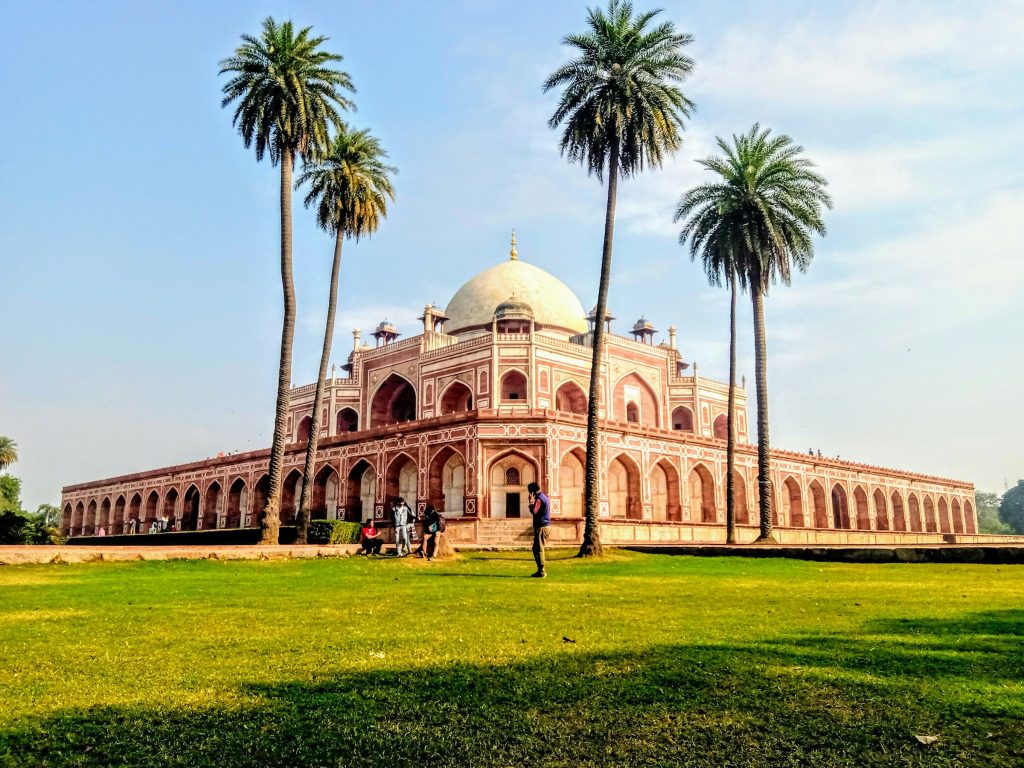
Your guide takes you into the narrow lanes of Old Delhi, past spice sellers and wedding-card printers, to the courtyard of Jama Masjid. In the afternoon the city opens out: the ceremonial avenues of New Delhi, India Gate and Humayun’s Tomb, whose red sandstone and marble garden tomb foreshadows the Taj. Finish at the soaring Qutub Minar if the traffic allows.
Overnight: Delhi · Meals: Breakfast
A morning express train brings you to Agra in about two hours. After settling in, explore Agra Fort, a walled Mughal citadel of palaces and audience halls above the Yamuna. Towards sunset, cross to the gardens of Mehtab Bagh on the far bank, where you can watch the light change on the Taj Mahal without the crowds of the main gate.
Overnight: Agra · Meals: Breakfast
Be at the gates early to see the Taj Mahal in the soft dawn light, when the marble turns from grey to pale pink. Your guide explains the story of Shah Jahan and Mumtaz Mahal and the inlay work up close. After breakfast, return to Delhi by road, about three to four hours, or by train, with the evening free.
Overnight: Delhi · Meals: Breakfast
Take a short flight east to Varanasi, one of the oldest living cities in the world and a sacred place for Hindus. In the evening, walk with your guide through the old lanes to Dashashwamedh Ghat to watch the evening aarti on the ghats, when priests swing brass lamps to the sound of bells and chanting by the Ganges.
Overnight: Varanasi · Meals: Breakfast
Before sunrise, drift along the river in a rowing boat as pilgrims bathe, pray and do their morning washing on the steps. Your guide explains the cremation ghats, which are watched quietly and without cameras. Later, drive about thirty minutes to Sarnath, where the Buddha gave his first sermon, to see the Dhamekh Stupa and the site museum.
Overnight: Varanasi · Meals: Breakfast
Today you fly to Kathmandu, either directly or with a connection in Delhi, depending on the season’s schedules; we confirm the routing when booking. Your Nepali driver meets you on arrival. Spend the rest of the day at an easy pace, perhaps with a stroll through Thamel or the old market streets around Asan, where small shrines are tucked between shops.
Overnight: Kathmandu · Meals: Breakfast
With your guide, explore Kathmandu Durbar Square, the old royal quarter of pagoda temples, carved wooden windows and palace courtyards. Then climb the long stairway to Swayambhunath, the hilltop stupa often called the Monkey Temple, where painted eyes look out over the whole valley. The afternoon is yours to rest or wander.
Overnight: Kathmandu · Meals: Breakfast
Cross the Bagmati to Patan, a city of Newar craftsmen, and visit its Durbar Square and the fine collection of bronzes in the Patan Museum. Continue to Bhaktapur, about an hour away, where brick lanes lead to the five-roofed Nyatapola temple and to Pottery Square, with clay pots drying in the sun. Try a bowl of the local curd.
Overnight: Kathmandu · Meals: Breakfast
After a relaxed breakfast, visit Pashupatinath, the great Shiva temple on the Bagmati; entry to the main shrine is for Hindus only, so you observe from the far bank. Then walk to Boudhanath, one of the largest stupas in the world, and join the clockwise circuit of Tibetan pilgrims. Leave the afternoon free to rest before Bhutan.
Overnight: Kathmandu · Meals: Breakfast
A short mountain flight brings you to Paro; on a clear day the high Himalaya fills the windows. Your licensed Bhutanese guide and driver meet you and drive about an hour along the river to Thimphu, the capital. Paro and Thimphu sit well above 2,000 metres, so keep the afternoon gentle and drink plenty of water.
Overnight: Thimphu · Meals: Breakfast, Lunch, Dinner
Start at the Memorial Chorten, where older residents circle and spin prayer wheels through the morning. Drive up to the giant seated Buddha Dordenma for views down the valley, then visit a school teaching the traditional arts of painting and woodcarving. In the late afternoon, walk around Tashichho Dzong, the fortress that houses government offices and the central monastic body.
Overnight: Thimphu · Meals: Breakfast, Lunch, Dinner
Leave Thimphu for Punakha, about three hours by road. At the Dochula pass, 108 small chortens crown the ridge and, on a clear morning, a line of snow peaks stands on the horizon. The road then drops into a warmer valley of rice terraces. In the afternoon, visit Punakha Dzong, set where two rivers meet.
Overnight: Punakha · Meals: Breakfast, Lunch, Dinner
Walk along field paths to Chimi Lhakhang, a small temple linked to the Divine Madman, a fifteenth-century saint remembered for his unconventional teaching. Cross a long suspension bridge strung with prayer flags, then climb through terraced fields to the Khamsum Yulley Namgyal Chorten for a view along the river. The pace today is unhurried.
Overnight: Punakha · Meals: Breakfast, Lunch, Dinner
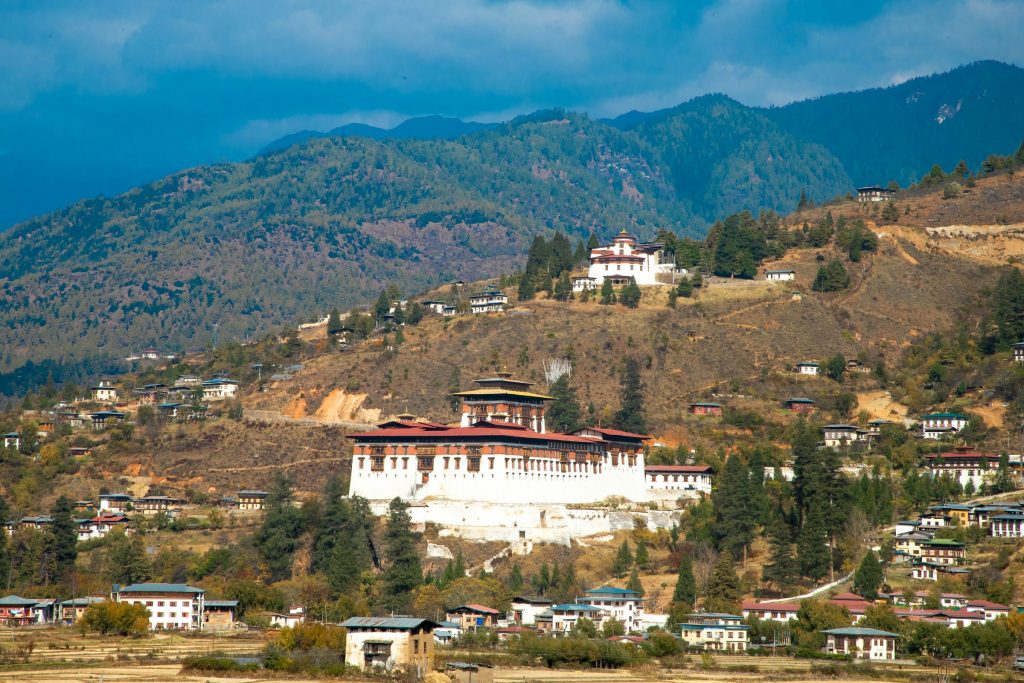
Retrace your route over the Dochula pass and continue to Paro, about four hours by road. In the afternoon, walk up to Rinpung Dzong, which guards the valley above the Paro River, and cross the old roofed cantilever bridge below it. If there is time, stop at Kyichu Lhakhang, one of the oldest temples in the country.
Overnight: Paro · Meals: Breakfast, Lunch, Dinner
Make an early start for Taktsang, the Tiger’s Nest monastery, which clings to a sheer rock face high above the valley floor. The path climbs steadily through pine and oak, with a teahouse roughly halfway where you can rest and look across at the monastery. Most people take the better part of a day for the round trip.
Overnight: Paro · Meals: Breakfast, Lunch, Dinner
After the climb, enjoy an easier day. Drive up the valley to the ruins of Drukgyel Dzong, then visit a farmhouse to see how rural families live, and perhaps try a hot-stone bath, a Bhutanese tradition. Spend the late afternoon browsing the small shops along Paro’s main street and enjoy a final dinner in the Himalaya.
Overnight: Paro · Meals: Breakfast, Lunch, Dinner
Your guide and driver take you to Paro airport for your onward flight, usually to Delhi, Kathmandu or another hub in the region. Flights in and out of Paro are timed around the mountain weather, so we plan your international connection with a comfortable margin and confirm the details when booking.
Overnight: — · Meals: Breakfast
What’s included
- Accommodation for 17 nights: breakfast in India and Nepal, full board in Bhutan
- Private airport and hotel transfers
- Private car and driver in India and Nepal, and a licensed guide and driver throughout Bhutan
- Local English-speaking guides for sightseeing in Delhi, Agra, Varanasi and the Kathmandu Valley
- Delhi to Agra train, and the flights named in the itinerary: Delhi–Varanasi, Varanasi–Kathmandu and Kathmandu–Paro
- Bhutan’s daily Sustainable Development Fee and visa (we arrange them; confirmed in your quote)
- Sunrise boat ride on the Ganges
- Entrance fees to sights in the itinerary
- 24/7 support during your trip
Not included
- International flights, including your flight out of Paro
- Visas for India and Nepal
- Travel insurance
- Meals in India and Nepal not listed, and drinks
- Tips for guides and drivers
- Personal expenses
- Optional activities such as a hot-stone bath or mountain flights
Good to know
Sample itinerary: we adapt the route, hotels and dates to you and confirm everything in your written quote. Best October–November and March–April.
In India you take a fast train from Delhi to Agra, about two hours, and return to Delhi by road or train. A short domestic flight takes you to Varanasi, and from there you fly on to Kathmandu, directly or via Delhi depending on the season. Kathmandu to Paro is a short flight. In Bhutan you travel by road with your guide and driver: Paro to Thimphu takes about an hour, Thimphu to Punakha about three hours and Punakha to Paro about four. Mountain flights depend on the weather, and we confirm all routes and schedules when booking.
Frequently asked questions
Travel in Bhutan is arranged through licensed tour operators, with a licensed guide and driver, and a daily Sustainable Development Fee applies. These rules change from time to time, so we confirm the current arrangements and arrange your visa when we book.
You change base several times, but most stops last two or three nights, and Day 10 and Day 17 are deliberately lighter. If you prefer fewer changes, we can leave out Varanasi or spend longer in one country.
October and November usually give clear mountain views in Nepal and Bhutan and pleasant days on the north Indian plains. March and April also work well, with rhododendrons in flower in the hills, though Delhi and Varanasi start to get hot. The summer monsoon brings heavy rain and cloud to all three.
You need to be comfortable walking uphill for a few hours on a well-used trail; there is no technical climbing. It comes near the end of the trip, after almost a week at altitude in Thimphu, Punakha and Paro, and you can turn back at the halfway teahouse if you prefer.