Punakha
Lower and warmer than the valleys to the west, Punakha is a place of rice terraces, rivers and one of Bhutan’s most beautiful fortresses, standing where two rivers meet.
Punakha lies in a low, fertile valley in western Bhutan, where two rivers flow together through rice terraces and small farming villages. The top things to do in Punakha are visiting its great dzong, walking to the temple of the Divine Madman and crossing the river on a long suspension bridge. At around 1,200 metres, the valley is much warmer than Paro and Thimphu, and it served as Bhutan’s capital for about three centuries before the capital moved to Thimphu.
The drive into the valley is part of the experience. From Thimphu, the road climbs to the Dochula pass, then winds down through forest to fields of rice, orange trees and banana plants, a striking change of scenery in a few hours.
Things to do in Punakha
Punakha Dzong
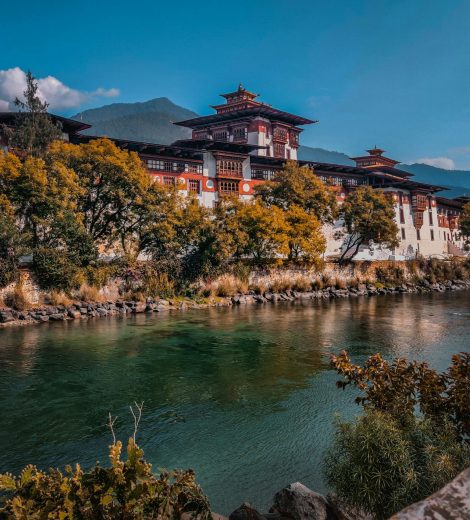
Punakha Dzong stands on a spit of land where the Pho Chhu (the “father” river) and the Mo Chhu (the “mother” river) meet. It was built in the 17th century by Zhabdrung Ngawang Namgyal, who unified Bhutan, and it remains one of the most important dzongs in the country. It is the winter home of the central monastic body and has hosted royal ceremonies. You enter across a wooden cantilever bridge into courtyards of whitewashed walls and gilded carvings, and in spring the jacaranda trees around it bloom purple.
Chimi Lhakhang
Chimi Lhakhang sits on a small hill among rice fields and is reached by a short, pleasant walk through the village of Sopsokha. The temple is associated with Drukpa Kunley, the Divine Madman, a 15th-century teacher famous for using humour and shock to share Buddhist ideas. It is known as a fertility temple, and couples come here hoping for blessings. In the village, many houses are painted with bold protective symbols linked to the saint, which may surprise first-time visitors.
The Punakha suspension bridge
Upstream from the dzong, a long suspension bridge draped in prayer flags crosses the Pho Chhu. It sways gently as you walk across, with views of the river and the valley. It links the town side with villages on the far bank, and it is a favourite stop for photos.
Khamsum Yulley Namgyal Chorten
Above the Mo Chhu, the Khamsum Yulley Namgyal Chorten is reached by a walk up through rice terraces after crossing the river. The temple was built in the traditional style and is dedicated to peace and protection. From the top, there are wide views along the valley.
Rafting and valley walks
The rivers of Punakha are good for gentle rafting, suited to beginners when conditions allow. Your guide can also arrange walks between farmhouses and terraced fields, where you will see daily life in rural Bhutan, from rice planting to drying chillies on rooftops.
Life in the Punakha valley
Punakha feels different from the higher valleys of western Bhutan. Thanks to its mild climate, it is one of the country’s main rice-growing areas, and the terraces change colour with the seasons, from flooded paddies in spring to bright green in summer and gold before the autumn harvest. Farmhouses are surrounded by vegetable plots and fruit trees, and chillies are laid out to dry on rooftops in the sun.
The dzong remains at the heart of local life. In late winter or early spring, the Punakha festivals bring people from across the district for masked dances and religious ceremonies in the courtyards, with dates set by the lunar calendar. At any time of year, you will see monks crossing the bridge and families visiting to pray.
Beyond Punakha
East of Punakha, the dzong of Wangdue Phodrang guards another river junction. Further on, the high Phobjikha valley is known for the black-necked cranes that spend the winter there, a quiet place for walks and birdwatching. Sightings depend on season.
Best time to visit Punakha
The best time to visit Punakha is in spring and autumn, but its lower altitude makes it pleasant in winter too.
| Months | What to expect | Best for |
|---|---|---|
| February to May | Warming days, festivals at the dzong in early spring, jacaranda in flower | Festivals, sightseeing and walks |
| June to September | Hot and humid with monsoon rain; bright green rice terraces | Lush scenery for flexible travellers |
| October to January | Clear, dry days; golden rice at harvest in autumn; mild winters | Hiking, rafting and Himalayan views on the drive in |
How long to stay and how Punakha fits a Bhutan trip
Two nights in Punakha is enough for most travellers to see the main sights at an easy pace. Add a night if you want to go rafting or hike more of the valley.
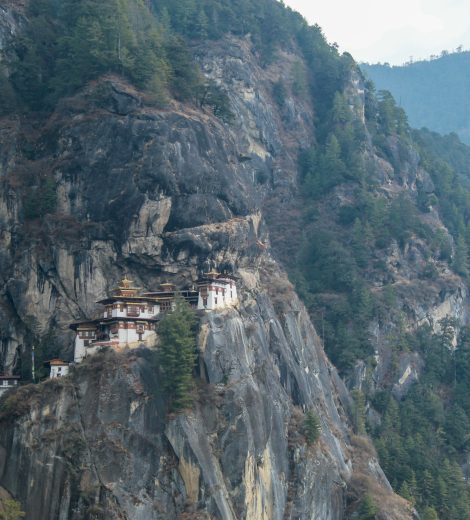
Punakha is about three hours by road from Thimphu, over the Dochula pass, and about four hours from Paro, where most trips begin and end. A classic first trip of about a week runs from Paro to Thimphu, then to Punakha, before returning to Paro for the Tiger’s Nest hike. With more time, you can continue east to Phobjikha and the central valleys.
Many travellers combine Bhutan with a trip through Nepal or India, with flights to Paro from cities such as Delhi and Kathmandu.
Tips for visiting Punakha
- Dress respectfully: long sleeves and covered knees for the dzong and temples.
- Be open-minded: the symbols at Chimi Lhakhang have deep local meaning.
- Pack for warmth: Punakha is warmer than Paro and Thimphu, so bring lighter layers too.
- Bring sun protection: walks through open fields can be hot by midday.
- Follow local custom: walk clockwise around temples and chortens.
Share your dates and interests on our plan your trip page, and a specialist will design a tailor-made journey through Bhutan, with your own guide and driver.
Highlights
- Punakha Dzong, standing where the Pho Chhu and Mo Chhu rivers meet
- Purple jacaranda trees in flower around the dzong in spring
- A walk through rice fields to Chimi Lhakhang, the temple of the Divine Madman
- Crossing the long, prayer-flag-strung suspension bridge over the Pho Chhu
- Hiking up through terraces to the Khamsum Yulley Namgyal Chorten
- Gentle river rafting on the Mo Chhu or Pho Chhu
- Green terraces in summer and golden rice at harvest time
- Himalayan views from the Dochula pass on the drive in
When to go & practical information
Best months: February, March, April, May, October, November, December
Recommended stay: 2 nights


Plan your trip to Punakha
Tell us when you would like to go and what draws you to Punakha. We will suggest a route that fits.
Plan My TripFAQs about Punakha
Have more questions? Contact us.
Spring, from March to May, and autumn, from September to November, are the most pleasant seasons. Punakha is lower and warmer than Paro and Thimphu, so it is also a comfortable place to visit in winter. Summers are hot and wet, with the monsoon bringing rain from about June to August.
Two nights is ideal. That gives you time for Punakha Dzong, the walk to Chimi Lhakhang, the suspension bridge and a hike to the Khamsum Yulley Namgyal Chorten without rushing. Add a night if you would like to go rafting or continue east to the Phobjikha valley.
Punakha is about three hours by road from Thimphu, crossing the Dochula pass, and about four hours from Paro. Roads wind through the mountains, so travel times depend on conditions. We arrange your guide, driver and transfers as part of your trip.
Chimi Lhakhang is a temple linked to Drukpa Kunley, a 15th-century teacher known as the Divine Madman for his unconventional ways of teaching Buddhism. It is known as a fertility temple, and couples come from across Bhutan to receive blessings there. The nearby village is known for the bold painted symbols on its houses.
Yes. The valley sits at around 1,200 metres, much lower than Paro or Thimphu, so days are warmer and winters are mild. The climate allows rice and fruit to grow, giving the valley its green, fertile look.
Wear long sleeves and long trousers or skirts, covering your shoulders and knees. Remove your hat inside the courtyards and your shoes before entering temple rooms. Photography is not allowed inside the temple rooms, so check with your guide.