
Bhutan
Dzongs above rivers, monasteries on cliffs and valleys of rice fields and pine forest: Bhutan is a Himalayan kingdom that welcomes visitors at its own pace.
Bhutan is a small Himalayan kingdom of forested valleys, prayer flags and white-walled fortresses, where Buddhist tradition still shapes daily life. A trip to Bhutan feels unhurried by design: the country welcomes visitors in a way that aims to protect its culture and environment, and the result is quiet roads, uncrowded monasteries and a strong sense of place. Bhutan tours usually focus on the western valleys of Paro, Thimphu and Punakha, with the option to travel further east. This guide explains where to go, the best time to visit Bhutan, how travel works and how long to stay.
Bhutan measures progress through Gross National Happiness, an idea that weighs well-being, culture and conservation alongside economic growth. For visitors, this shows in the care taken over architecture, forests and festivals, and in the many people who still wear the national dress, the gho for men and the kira for women, in everyday life. Food is hearty and often spicy: ema datshi, a dish of chillies and cheese, is the national favourite, usually served with red rice.
How travel to Bhutan works
Bhutan does things differently from its neighbours. Visits are arranged through licensed tour operators, and international travellers pay a daily Sustainable Development Fee, which supports the country’s conservation, health and education. Your trip usually includes a licensed Bhutanese guide and a driver, who travel with you and help you understand what you see.
These rules have changed several times and may change again. We confirm the current requirements and fees when we book, and we take care of the arrangements with our licensed partners in Bhutan, so you can focus on the journey itself.
Where to go in Bhutan
Most trips concentrate on the western valleys, which are linked by scenic mountain roads. With more time, you can head into the central valleys, where fewer visitors travel.
Paro
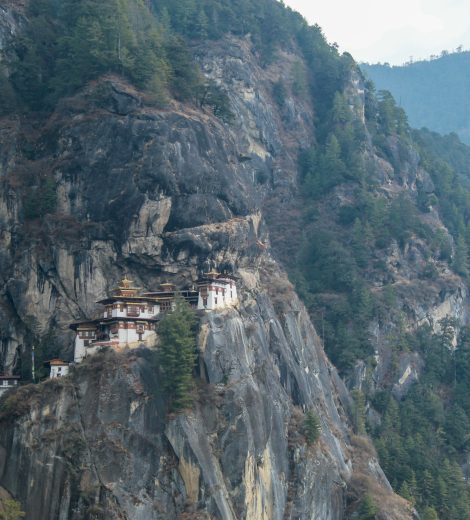
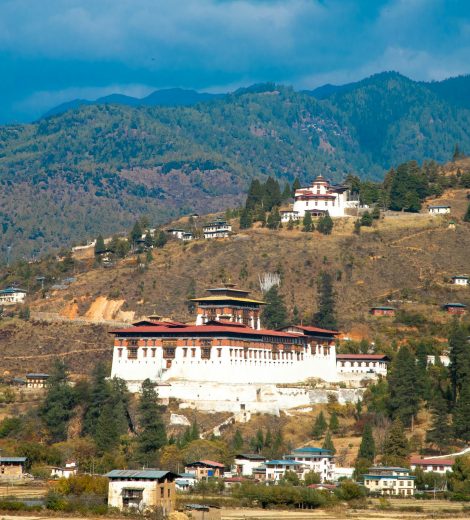
Paro is home to Bhutan’s international airport and is the starting point for most journeys. The valley is wide and green, with traditional farmhouses, rice fields and the Rinpung Dzong above the river. The highlight for many visitors is the walk to Paro Taktsang, the Tiger’s Nest monastery, which clings to a cliff high above the valley. The trail is steep and takes most of a morning, so it is often saved for the end of a trip, once you are used to the altitude.
Thimphu
Thimphu, the capital, lies about an hour’s drive from Paro. It is a small, relaxed city where you can visit Tashichho Dzong, the seat of government and of the central monastic body, the giant seated Buddha Dordenma statue on the hillside, and the weekend market. Workshops teaching traditional arts, such as painting and woodcarving, give an insight into Bhutanese crafts.
Punakha
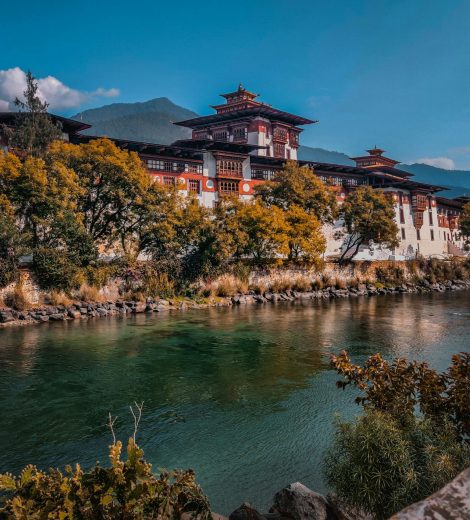
From Thimphu, the road climbs over the Dochula Pass, marked by memorial chortens and, on clear days, views of the high Himalaya. It then descends to the warmer valley of Punakha, the former capital. Punakha Dzong stands where two rivers meet and is one of the most beautiful buildings in the country. Gentle walks lead through rice fields to village temples such as Chimi Lhakhang.
The Phobjikha Valley
East of Punakha, the glacial Phobjikha Valley is a wide, open bowl of farmland and pine forest around Gangtey Monastery. In winter, black-necked cranes come here from the Tibetan Plateau, although sightings depend on luck and season. Nature trails make it a peaceful place for a night or two.
Bumthang and central Bhutan
Further east, the Bumthang valleys are considered the spiritual heartland of Bhutan, with some of its oldest temples and monasteries. The drive is long but rewarding, and domestic flights can sometimes shorten the journey. Bumthang suits travellers on a longer trip who want to see rural Bhutan at a slower pace.
Best time to visit Bhutan
Spring and autumn are the best times to visit Bhutan, with mild weather and good chances of mountain views. Winter is cold but often clear and quiet, while the summer monsoon brings rain and cloud.
| Months | What to expect | Best for |
|---|---|---|
| March to May | Mild, with rhododendrons and other flowers in bloom; some haze | Valley walks, the Tiger’s Nest and spring festivals |
| June to August | Monsoon rain and cloud, green landscapes and fewer visitors | Flexible travellers interested in culture |
| September to November | Clear skies after the rains and comfortable temperatures | Mountain views, hiking and autumn festivals |
| December to February | Cold, dry and clear; snow possible on the high passes | Quiet monasteries and the cranes of Phobjikha |
Many dzongs hold a tshechu, a religious festival with masked dances, and Paro and Thimphu hold well-known festivals in spring and autumn. Their dates follow the lunar calendar, so we check them for your travel dates.
How many days do you need in Bhutan?
Even a short visit gives you a real sense of the country, but allowing a few extra days means less time in the car and more time walking. These route ideas can be adapted to your interests.
- About 5 days: Paro, Thimphu and Punakha, ending with the walk to the Tiger’s Nest.
- About 1 week: the same valleys at a gentler pace, with a night in the Phobjikha Valley.
- 10 days or more: continue east to Bumthang, or add a short trek, before returning to Paro.
Getting around Bhutan
Paro is the main entry point by air, with flights from several cities in the region, including Delhi and Kathmandu. Flights into Paro depend on good weather because of the mountain approach, and on clear days the views of the Himalaya can be remarkable. Some travellers also enter Bhutan overland from India, through the border town of Phuentsholing.
Within Bhutan, you travel by road with your guide and driver. Roads are winding and climb over high passes, so distances that look short on a map can take several hours. Paro to Thimphu takes about an hour, and Thimphu to Punakha about three hours. Punakha lies at around 1,200 metres, while Paro and Thimphu are well above 2,000 metres, and the passes are higher still.
Travelling safely in Bhutan
Bhutan is a calm and welcoming country to visit, and having a guide and driver with you makes travel straightforward. A few practical points help you make the most of it.
- Take your time on hills and passes, drink plenty of water and speak to a doctor before travelling if you have health concerns about altitude.
- Bring warm layers, as mornings and evenings can be cold even in spring and autumn.
- Wear long sleeves and long trousers or skirts when visiting dzongs and temples, remove hats and follow your guide’s advice on photography, which is not allowed inside many shrines.
- Walk clockwise around chortens and prayer wheels as a sign of respect.
- Check your government’s official travel advice before you go and take out comprehensive travel insurance.
Why plan your Bhutan trip with a local specialist
Bhutan’s travel system rewards careful planning. A specialist handles the arrangements with licensed operators, times your trip around festivals or quieter seasons, and paces the drives so you have time to walk and explore. We choose guides who share their knowledge of Bhutanese history and Buddhism and adapt the plan to how you like to travel.
Tell us about your plans, and a specialist will design a tailor-made journey through Bhutan for you.
Highlights
- The cliffside Tiger’s Nest monastery above the Paro Valley
- Punakha Dzong, where two rivers meet
- Mountain views from the Dochula Pass
- Masked dances at a tshechu festival
- Daily life and crafts in Thimphu, the capital
- Winter cranes in the Phobjikha Valley
- Village walks through rice fields and farmland
- The old temples of Bumthang in central Bhutan
When to go & practical information
Best time to visit: March to May brings mild weather and flowering rhododendrons, and September to November offers clear skies and fine mountain views. December to February is cold but dry and quiet. June to August is the monsoon season, with rain and cloud.
Climate: Temperatures vary with altitude: Punakha is warm, while Paro and Thimphu are cooler and the high passes can be cold at any time of year. The summer monsoon can bring landslides that slow road travel.
- Currency: Bhutanese ngultrum. Cash is useful outside the main towns, as cards are not accepted everywhere.
- Languages: Dzongkha is the national language, and English is widely spoken and used in schools.
- Time zone: Bhutan Time (UTC+6).
- Getting around: By road with your licensed guide and driver; occasional domestic flights to central and eastern Bhutan.
- Plugs and power: 230 volts with a mix of socket types, so bring a universal adaptor.
- Entry requirements: Visits are arranged through licensed tour operators. Check official government sources well before you travel, as rules change from time to time.


Plan your trip to Bhutan
Tell us when you would like to go and what draws you to Bhutan. We will suggest a route that fits.
Plan My TripFAQs about Bhutan
Have more questions? Contact us.
March to May and September to November are the best months, with mild weather and clearer skies. December to February is cold but often clear, while June to August brings monsoon rain.
Five days covers Paro, Thimphu and Punakha. A week lets you travel at a gentler pace or add the Phobjikha Valley, and ten days or more allows time for central Bhutan.
Bhutan is a calm and welcoming country, and travelling with a guide and driver makes things straightforward. The main practical points are mountain roads and altitude, so allow time to adjust. Check your government’s official travel advice before you go.
Visits to Bhutan are arranged through licensed tour operators, and a daily Sustainable Development Fee applies. These rules change from time to time, so we confirm the current ones when we book.
It is a steep uphill walk on a good trail that takes most of a morning, with a viewpoint about halfway up. Go at your own pace, and save it for later in your trip once you are used to the altitude.