
Mumbai
Gothic railway stations, Art Deco seafronts, island cave temples and great street food make Mumbai, the port city of India’s west coast, a lively start or finish to any trip.
Mumbai is the great port city of India’s west coast, a fast-moving place of grand Victorian buildings, Art Deco seafronts, ancient cave temples and some of the best street food in the country. The top things to do in Mumbai range from the Gateway of India and the Elephanta Caves to the markets, the bazaars and an evening walk along Marine Drive. This Mumbai travel guide also covers the best time to visit Mumbai and how it fits into a wider trip.
Why visit Mumbai?
Mumbai began as a group of seven islands that were joined over the centuries by land reclamation. Under British rule it grew into a major trading port, and the wealth of that era left a remarkable collection of buildings. Today it is India’s financial capital and the home of its Hindi film industry, often called Bollywood.
It is a city of contrasts, where gleaming towers rise beside old fishing villages and colonial landmarks stand next to busy local markets. For a first-time visitor, it can feel intense, but with a good guide and a sensible plan it becomes one of the most rewarding cities in India.
Things to do in Mumbai
The Gateway of India and Colaba
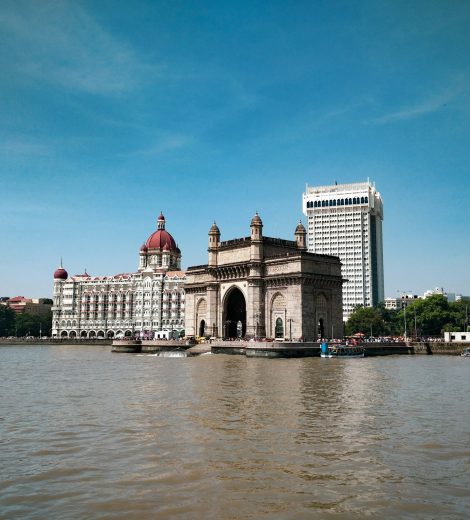
The Gateway of India is a great basalt arch on the waterfront at Apollo Bunder, built in the early 20th century to mark a royal visit. It is the city’s best-known landmark and the place where boats leave for Elephanta. Behind it, the Colaba district has tree-lined streets, old cafés, galleries and lively street stalls, and makes a good base for exploring the southern part of the city on foot.
Chhatrapati Shivaji Maharaj Terminus
Chhatrapati Shivaji Maharaj Terminus, formerly Victoria Terminus, is a working railway station and a UNESCO World Heritage Site. Completed in the late 19th century, it blends Victorian Gothic Revival design with Indian architectural details, with a great central dome, carved stonework and stained glass. It is still one of the busiest stations in the city, so you see it at its best from the street outside or on a guided heritage walk.
The Victorian Gothic and Art Deco Ensembles
Around the Oval Maidan, a long green space where locals play cricket, stand two remarkable groups of buildings. On one side are Victorian Gothic public buildings, including the High Court and the University of Mumbai with its clock tower. On the other, along Marine Drive and the Back Bay, is one of the largest groups of Art Deco buildings in the world, with curved balconies and ocean-liner details. Together they form the Victorian Gothic and Art Deco Ensembles of Mumbai, a UNESCO World Heritage Site.
Elephanta Caves
The Elephanta Caves sit on an island in Mumbai harbour, about an hour by ferry from the Gateway of India. These rock-cut cave temples are dedicated mainly to the Hindu god Shiva and are a UNESCO World Heritage Site. The highlight is the great three-headed sculpture of Shiva, carved deep into the rock of the main cave. A visit takes half a day, including the boat trip and a climb of steps up to the caves.
Marine Drive and Chowpatty
Marine Drive curves along the Back Bay for several kilometres, lined with Art Deco apartment blocks. At dusk, when the streetlights come on in a long arc, it is often called the Queen’s Necklace. At its northern end, Chowpatty Beach is a favourite place for families to gather in the evening and to try snacks from the food stalls.
Markets, the dhobi ghat and the old city
Mumbai’s markets show everyday life at its most energetic. Crawford Market, in a 19th-century building, sells fruit, spices and household goods. At the Mahalaxmi dhobi ghat, rows of open-air washing pens show how much of the city’s laundry is still done by hand. Further north, the Banganga Tank is an old stepped water tank surrounded by temples, a quiet corner in a loud city, and the Haji Ali Dargah, a mosque and shrine, stands on an islet reached by a causeway at low tide.
Food in Mumbai
Eating is one of the great pleasures of Mumbai. Try vada pav, a spiced potato fritter in a soft bun, pav bhaji, a buttery vegetable curry with bread, and bhel puri, a crunchy, tangy snack sold on the beaches. The city’s old Irani cafés serve sweet tea and bun maska, and coastal seafood dishes are excellent. A guided food walk is a good way to taste a lot while knowing what is safe to try.
Best time to visit Mumbai
The best time to visit Mumbai is from November to February, when the weather is warm, dry and less humid. From March to May it gets hot and sticky. The monsoon arrives around June and lasts until about September, bringing heavy rain that can flood streets and disrupt ferries to Elephanta.
| Months | What to expect | Best for |
|---|---|---|
| November to February | Warm, dry and sunny, with lower humidity | Sightseeing, walking tours, Elephanta, food walks |
| March to May | Hot and increasingly humid before the rains | Indoor sights and early-morning or evening walks |
| June to September | Monsoon: heavy rain, flooding at times, rough seas | Seeing the city in the rains; fewer outdoor trips |
How long to stay and how it fits a trip
Two or three nights gives you time for the Gateway of India, the heritage buildings of the Fort area, the Elephanta Caves, a market and a food walk, without rushing. Many travellers start or end a trip to India here, as Mumbai has many international flight connections.
Mumbai links easily with the rest of the country. A flight of about an hour takes you to the beaches of Goa, and flights of about two hours reach Udaipur, Jaipur and Delhi in the north. You can also fly south to Kochi for the Kerala backwaters. A popular idea is to pair a few days in Mumbai with Rajasthan, or to finish a trip with a slower week on the coast.
Tips for visiting Mumbai
- Traffic can be heavy, so plan each day around one area rather than crossing the city repeatedly.
- Dress modestly and cover your head where asked at mosques and shrines, and remove shoes at temples.
- Drink bottled or filtered water and choose busy food stalls with high turnover.
- Some monuments close one day a week; we check the current arrangements when we plan your days.
Highlights
- The Gateway of India on the waterfront at Apollo Bunder
- Chhatrapati Shivaji Maharaj Terminus, a UNESCO-listed railway station
- The rock-cut cave temples of Elephanta, reached by ferry
- Victorian Gothic and Art Deco buildings around the Oval Maidan
- Dusk along Marine Drive, the Queen’s Necklace
- A street food walk: vada pav, pav bhaji and bhel puri
- Everyday life at Crawford Market and the dhobi ghat
- The quiet stepped tank of Banganga
When to go & practical information
Best months: January, February, November, December
Recommended stay: 2–3 nights

Plan your trip to Mumbai
Tell us when you would like to go and what draws you to Mumbai. We will suggest a route that fits.
Plan My TripFAQs about Mumbai
Have more questions? Contact us.
November to February is the best time, with warm, dry and less humid weather. March to May is hot and humid. The monsoon, from about June to September, brings heavy rain and can disrupt ferries to Elephanta.
Two to three nights is a good length. That covers the Gateway of India, the heritage buildings, the Elephanta Caves, a market and a food walk at a relaxed pace.
Ferries leave from the Gateway of India and take about an hour to reach Elephanta Island. From the jetty there is a climb up steps to the caves. Allow half a day, and note that boats may not run in rough monsoon weather.
Mumbai has three: Chhatrapati Shivaji Maharaj Terminus, the Elephanta Caves and the Victorian Gothic and Art Deco Ensembles of Mumbai. All three can be seen in two full days.
Street food is a big part of Mumbai life. Choose busy stalls where food is cooked fresh, avoid raw salads and drink bottled or filtered water. A guided food walk is an easy way to try local dishes with confidence.
Mumbai pairs well with the beaches of Goa, about an hour away by air, or with the palaces and forts of Rajasthan to the north. It is also a convenient place to start or end a trip because of its many flight connections.