
Darjeeling
Tea gardens, a historic mountain railway and sunrise over Kanchenjunga make Darjeeling, in the hills of West Bengal in India, a cool and gentle escape in the eastern Himalaya.
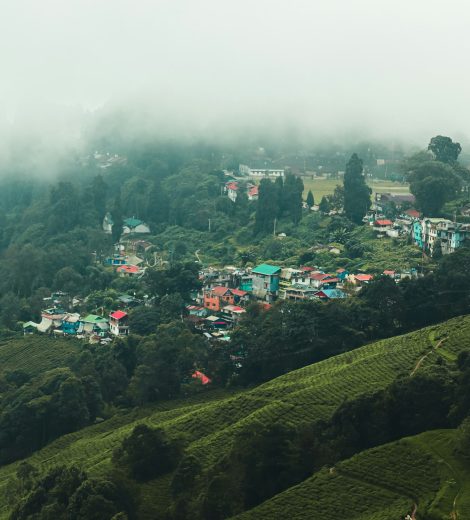
Darjeeling is a hill town in the far north of West Bengal, spread along a ridge at around 2,000 metres with tea gardens falling away below and the snows of Kanchenjunga on the horizon. The best things to do in Darjeeling are simple and rewarding: walk through the tea estates, ride the little steam train, and get up early for sunrise over the Himalaya. This Darjeeling travel guide also covers the best time to visit Darjeeling and how it fits into a wider trip to India.
Why visit Darjeeling?
Darjeeling grew in the 19th century as a cool retreat from the plains, and its name became famous around the world for the tea grown on its slopes. Today the town is a mix of colonial-era buildings, Buddhist monasteries, Hindu temples, steep lanes and busy markets, with people of Nepali, Tibetan, Lepcha and Bengali heritage living side by side.
Above all, it is the setting that draws people. On a clear morning, Kanchenjunga, the third-highest mountain in the world, seems to float above the clouds, filling the northern sky. The air is fresh, the pace is slow, and a cup of tea on a terrace with that view is reason enough to come.
Things to do in Darjeeling
Sunrise at Tiger Hill
Tiger Hill rises a few kilometres outside town and is the classic place to watch the sun come up over the eastern Himalaya. You leave in the dark, and as the light grows the peaks of the Kanchenjunga range turn pink and then gold. On very clear mornings you can also make out the summit of Everest far to the west. It is popular, so expect company, and bring warm clothes: it is cold before dawn in every season. On the way back, many people stop at the monastery at Ghum.
The Darjeeling Himalayan Railway
The Darjeeling Himalayan Railway, known to everyone as the toy train, has climbed from the plains to Darjeeling on a narrow-gauge line since the 1880s. It is a UNESCO World Heritage Site as part of the Mountain Railways of India. The full journey from the plains is long and slow, so most visitors take a shorter ride from Darjeeling to Ghum and back. The line loops around the Batasia Loop, a spiral with a war memorial and garden and mountain views, and passes so close to homes and shops that you could almost reach out and touch them. Some services run with steam engines, and timetables change, so we confirm the current options when we plan your stay.
Tea estates
The slopes around Darjeeling are covered in neat rows of tea bushes, and visiting an estate is one of the highlights of any stay. You can walk among the bushes, watch leaves being plucked in season, and see how the leaf is withered, rolled and dried in the factory. A guided tasting explains the difference between the delicate first flush of spring and the fuller second flush of early summer. Some estates have heritage bungalows where you can stay among the gardens.
The Mall, Chowrasta and the town
The heart of Darjeeling is Chowrasta, an open square on the ridge where people gather to talk, shop and watch the mountains. From here the Mall leads around Observatory Hill, a gentle walk with views on clear days. Below, steep lanes lead down through markets selling tea, woollens and Tibetan crafts, and past old churches and colonial buildings.
Monasteries and mountaineering history
Ghum Monastery, just outside town, houses a large statue of the Maitreya Buddha and is one of the oldest Tibetan Buddhist monasteries in the area. In town, the Himalayan Mountaineering Institute was founded after the first ascent of Everest, and Tenzing Norgay, who made that climb, lived in Darjeeling. Its museum tells the story of Himalayan climbing. Next door, the zoo is known for its breeding programmes for high-altitude animals such as the red panda and snow leopard.
The character of the hills
Darjeeling rewards slow travel. Mist can roll in within minutes and roll out again just as fast, revealing the peaks. Mornings start early, with tea and steamed momos from small stalls, and evenings are cool enough for a fire. Short walks through villages and tea gardens, or a drive to viewpoints along the ridge, show you a quieter side of the hills away from the town centre.
Best time to visit Darjeeling
The best seasons are spring, from March to May, and autumn, from October to November. Autumn usually brings the clearest mountain views after the monsoon has washed the air. From June to September the monsoon brings heavy rain, cloud and the risk of landslides on mountain roads. Winter is cold but often clear.
| Months | What to expect | Best for |
|---|---|---|
| March to May | Mild, pleasant days; flowers in bloom; some haze can hide the peaks | Tea gardens during the first flush, walks, the toy train |
| June to September | Monsoon: heavy rain, mist and possible landslides on roads | Green landscapes and tea plucking for those happy with rain |
| October to February | Clear, dry air and the best mountain views; cold, sometimes frosty nights in winter | Kanchenjunga views, Tiger Hill sunrise, photography |
How long to stay and how it fits a trip
Two or three nights is about right. That gives you one early morning at Tiger Hill, a ride on the toy train, a tea estate visit and time to walk around town, with a spare morning in case cloud hides the mountains. With four nights you can stay at a tea estate as well as in town.
The nearest airport is Bagdogra, near Siliguri on the plains, which has flights from Delhi, Kolkata and other cities. From there the drive up to Darjeeling takes about three hours on winding roads. The main railway station on the plains is New Jalpaiguri, also about three hours by road.
Darjeeling combines well with the rest of the eastern Himalaya. Many travellers continue to Sikkim, or go on to Bhutan, starting in Paro or Thimphu. It also makes a cool mountain contrast to the plains of north India: Varanasi and Delhi are each a flight away from Bagdogra. If you love the high Himalaya, Ladakh offers a very different, drier mountain landscape in summer.
Tips for visiting Darjeeling
- Pack warm layers in every season; mornings and evenings are cool, even in May.
- Keep a spare morning for Tiger Hill in case of cloud; mountain views are never guaranteed.
- Remove your shoes in monasteries and walk clockwise around prayer wheels and stupas.
- The town is steep, so comfortable walking shoes make a big difference.
Highlights
- Sunrise over Kanchenjunga from Tiger Hill
- A ride on the Darjeeling Himalayan Railway, a UNESCO World Heritage Site
- The spiral of the Batasia Loop with mountain views
- Walking through tea gardens and visiting a tea factory
- Tasting first-flush and second-flush Darjeeling teas
- Ghum Monastery and its statue of the Maitreya Buddha
- Mountaineering history at the Himalayan Mountaineering Institute
- Evening strolls around Chowrasta and the Mall
When to go & practical information
Best months: March, April, May, October, November
Recommended stay: 2–3 nights
4 journeys in Darjeeling

Plan your trip to Darjeeling
Tell us when you would like to go and what draws you to Darjeeling. We will suggest a route that fits.
Plan My TripFAQs about Darjeeling
Have more questions? Contact us.
March to May and October to November are the best times. Autumn usually brings the clearest views of Kanchenjunga after the monsoon. From June to September, heavy rain and cloud are common and roads can be affected by landslides.
Two to three nights is enough for Tiger Hill at sunrise, the toy train, a tea estate and the town. A spare morning is useful in case cloud hides the mountains. Add a night or two if you would like to stay on a tea estate.
Fly to Bagdogra, near Siliguri, then drive about three hours up to Darjeeling. You can also take a train to New Jalpaiguri, about the same distance by road. We arrange a private transfer as part of your trip.
Yes. The Darjeeling Himalayan Railway is a UNESCO World Heritage Site as part of the Mountain Railways of India. A short ride from Darjeeling to Ghum, around the Batasia Loop, gives you a good taste of it without spending a whole day on board.
On very clear mornings, Everest can be seen far away from Tiger Hill, though it looks small on the horizon. The main view is of Kanchenjunga, which fills the northern sky. Mountain views depend on the weather, so keep your plans flexible.
Yes, the two are close and make a good pairing in the eastern Himalaya. Many travellers continue from Darjeeling into western Bhutan. Visits to Bhutan are arranged through licensed tour operators, and we confirm the current rules when we plan your trip.