


Sri Lanka
Ancient rock fortresses, sacred temples, tea-covered hills and a coast of quiet bays: Sri Lanka brings a great deal of variety into one island.
Sri Lanka is an island of ancient cities, tea-covered hills, wildlife parks and palm-fringed beaches, all within a few hours of each other. A trip to Sri Lanka can take you from the rock fortress of Sigiriya to the sacred city of Kandy, the misty hills around Ella and the old ramparts of Galle in a single journey. Sri Lanka tours suit travellers who want variety without long distances, and the island’s warm hospitality and cooking add to the pleasure. This guide covers where to go, the best time to visit Sri Lanka, how long to stay and how to travel safely.
Buddhism has shaped the island for more than two thousand years, and Hindu, Muslim and Christian communities add their own temples, mosques and churches. Food is a highlight in itself, from rice and curry with many small dishes to hoppers, string hoppers and fresh seafood on the coast. Tea, spices and coconut are part of every landscape.
Where to go in Sri Lanka
Most trips follow a loop from the west coast through the Cultural Triangle in the north-central plains, up into the hill country and down to the south coast. These are the places we plan most often.
Colombo
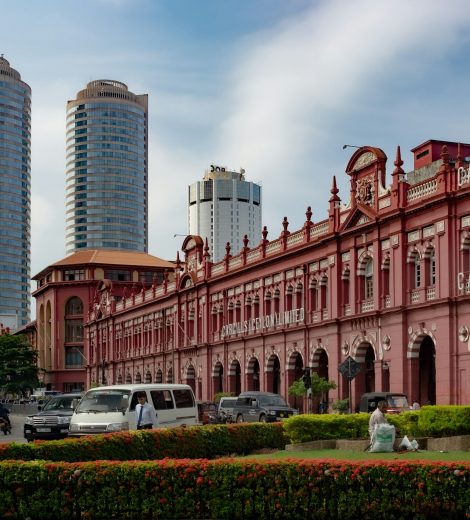
Colombo, the commercial capital, is where most international flights arrive. It is a city of colonial buildings, Buddhist and Hindu temples, markets and a long seafront promenade. Many travellers spend a night here at the start or end of a trip, while others head straight out of the city towards the hills or the coast.
Sigiriya and the Cultural Triangle
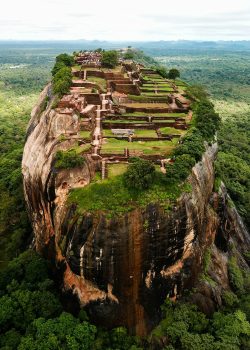
In the dry heart of the island, Sigiriya is a fortress and palace built on top of a great rock, with frescoes and water gardens around its base. It is a UNESCO World Heritage Site, as are the nearby ancient cities of Anuradhapura and Polonnaruwa and the Dambulla cave temple, with its painted ceilings and Buddha statues. Together they form the Cultural Triangle, and national parks such as Minneriya and Kaudulla nearby are known for herds of elephants, although sightings depend on luck and season.
Kandy
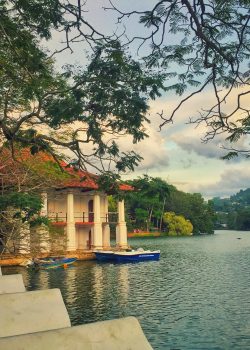
Kandy, the last royal capital of Sri Lanka, sits around a lake in the green hills of the centre. The Temple of the Sacred Tooth Relic is one of the most important places of worship in the Buddhist world, and the city is a UNESCO World Heritage Site. Kandy is a good base for botanical gardens, spice gardens and traditional dance performances, and it is the usual starting point for the train journey into the hill country.
Ella and the hill country
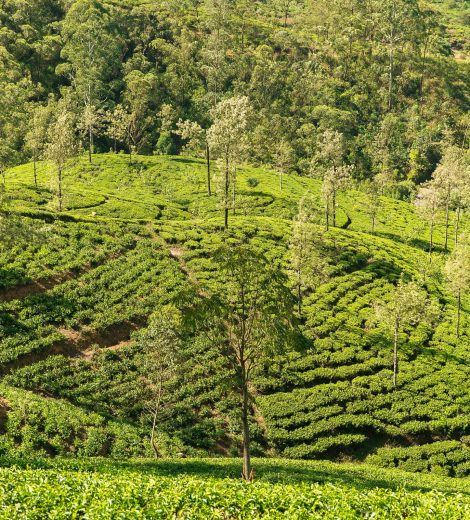
The hill country is a landscape of tea estates, waterfalls and cool air, and parts of it are protected as a UNESCO World Heritage Site. The train from Kandy winds through the plantations to Ella, a small town in a mountain gap with walks to viewpoints such as Little Adam’s Peak and the Nine Arch Bridge. Along the way, Nuwara Eliya has colonial-era bungalows and tea factories, and Horton Plains offers walks across high grassland to the cliff edge known as World’s End.
Galle and the south coast
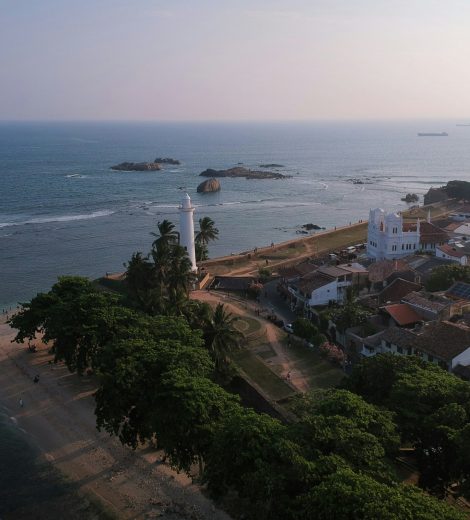
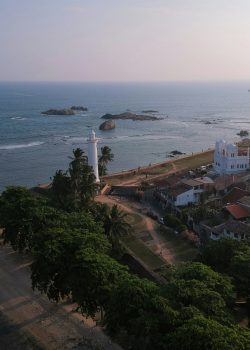
On the south-west coast, Galle is a fortified old town built by the Portuguese and later the Dutch, and its ramparts, lanes and churches are a UNESCO World Heritage Site. The coast to the east has sandy bays and fishing villages, and from around November to April boat trips set out to look for whales. Inland, Yala National Park is known for leopards, and Udawalawe for elephants, with sightings depending on luck.
The east coast
The east coast comes into season when the south-west is wet, roughly from April to September. Trincomalee sits on a large natural harbour, with Hindu temples on the headland and beaches to the north. Further south, Pasikudah has calm, shallow water, and Arugam Bay is known for its surf. The east combines well with the Cultural Triangle in the summer months.
Best time to visit Sri Lanka
Sri Lanka has two monsoons that affect different parts of the island at different times, so there is somewhere good to visit in every month. The west and south coasts and the hill country are usually at their best from December to March, while the east coast is drier from around April to September.
| Months | What to expect | Best for |
|---|---|---|
| December to March | Dry and sunny in the west, south and hill country; wetter on the east coast | Galle, the south coast beaches, Kandy, Ella and the Cultural Triangle |
| April to September | South-west monsoon brings rain to the west and south; the east and north are drier | East coast beaches, the Cultural Triangle and elephant-watching |
| October and November | Changeable, with rain possible across much of the island | Flexible travellers looking for quieter sites and green landscapes |
Showers in the tropics are often short, and the hill country can be cool and misty at any time of year. We plan your route around the weather for your dates.
How many days do you need in Sri Lanka?
Sri Lanka is compact, but roads are winding and journeys take longer than the distances suggest. These route ideas show what works well in different amounts of time.
- About 1 week: Sigiriya and the Cultural Triangle, Kandy and the train to Ella, or a shorter loop ending at Galle.
- About 10 days: the Cultural Triangle, Kandy and the hill country, then a safari in Yala or Udawalawe and a few nights near Galle.
- 2 weeks or more: the full loop at an easy pace, with time on the beach, or a combined trip with southern India or the Maldives.
Getting around Sri Lanka
Most travellers get around Sri Lanka by road with their own driver, which gives flexibility to stop at temples, tea estates and roadside fruit stalls. Colombo to Kandy takes around three to four hours by road, and the expressway brings Galle within about two hours of Colombo. Driving from Colombo to Sigiriya takes around four to five hours.
The train through the hill country between Kandy and Ella is one of the island’s best-loved journeys, taking around six to seven hours through tea plantations and mountain scenery. We often combine a section of the train with a driver who meets you at the other end with your luggage.
Travelling safely in Sri Lanka
Sri Lanka is a friendly country, and most visitors travel without difficulty. A few sensible habits help.
- Use pre-arranged transfers and licensed drivers rather than unofficial taxis, especially on arrival.
- Swim only at beaches that are known to be safe, and follow local advice about currents and seasonal sea conditions.
- Drink bottled or filtered water, and protect yourself from the sun and from mosquitoes.
- At temples, cover your shoulders and knees, remove your shoes and hats, and never pose with your back to a Buddha statue for photographs.
- Check your government’s official travel advice before you go and take out comprehensive travel insurance.
Why plan your Sri Lanka trip with a local specialist
A specialist can build your route around the monsoons, balance driving days with time to relax, and fit in the train journey and wildlife parks at the right moments. We arrange experienced drivers and local guides, and adjust the plan to suit your pace and interests.
Send us your ideas, and a specialist will plan a tailor-made trip around Sri Lanka for you.
Highlights
- Climbing the rock fortress of Sigiriya
- The Temple of the Sacred Tooth Relic in Kandy
- The scenic train ride through tea country to Ella
- Walking the ramparts of Galle’s old town at sunset
- Painted caves and Buddha statues at Dambulla
- Looking for leopards and elephants on safari
- Tea estates and waterfalls in the hill country
- Beaches on the south and east coasts
When to go & practical information
Best time to visit: December to March is the best time for the west and south coasts, the hill country and the Cultural Triangle. The east coast is at its best from around April to September. October and November can be wet in many areas.
Climate: Sri Lanka is warm and humid all year on the coasts and plains, while the hill country is cooler, especially at night. The south-west monsoon affects the west and south from around May to September, and the north-east monsoon brings rain to the east and north from around October to January.
- Currency: Sri Lankan rupee. Cards are accepted in hotels and larger shops; carry some cash for markets and temples.
- Languages: Sinhala and Tamil are the official languages, and English is widely spoken in tourism.
- Time zone: Sri Lanka Standard Time (UTC+5:30).
- Getting around: By road with your own driver, with scenic train journeys through the hill country.
- Plugs and power: 230 volts with a mix of socket types, so bring a universal adaptor.
- Entry requirements: Check official government sources well before you travel, as rules depend on your nationality and change from time to time.




Plan your trip to Sri Lanka
Tell us when you would like to go and what draws you to Sri Lanka. We will suggest a route that fits.
Plan My TripFAQs about Sri Lanka
Have more questions? Contact us.
December to March is best for the west and south coasts, the hill country and the Cultural Triangle. From around April to September, the east coast is drier. Because the two monsoons affect different areas, there is somewhere good to visit in every month.
A week gives you a good taste of the Cultural Triangle, Kandy and the hill country. Ten days lets you add a safari and the south coast, and two weeks allows the full loop at a relaxed pace with time on the beach.
Most visitors travel in Sri Lanka without difficulty. Use pre-arranged transfers, take care with sea conditions at the beach and keep valuables secure in busy places. Check your government’s official travel advice before you go.
Yala is known for leopards and parks such as Udawalawe and Minneriya for elephants. Sightings depend on luck and season, but a good guide and a well-timed safari give you the best chance.
Cover your shoulders and knees, and remove your shoes and hats before entering. White or light clothing is often worn by worshippers. Be respectful with photography, and never pose with your back to a Buddha statue.