
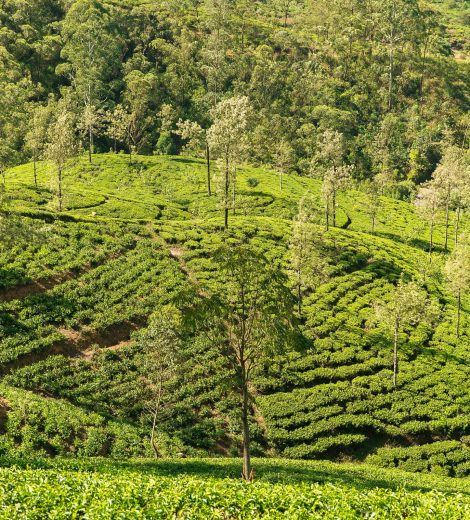
Ella
Ella is a small village in Sri Lanka’s tea country, reached by a famous hill-country train and surrounded by easy walks, waterfalls and wide valley views.
Ella is a relaxed village in the hill country of Sri Lanka, set at around 1,000 metres among tea estates, forest and steep green hills. Most visitors arrive on the famous hill-country train, and stay to walk, drink tea and watch the clouds drift through the valley. This Ella travel guide covers the best things to do in Ella, the best time to visit and how to fit it into a wider trip.
What to see and do in Ella
Ella is small, and most of its sights are walks that start from the village. Mornings are usually the clearest time of day, so plan early starts and keep the afternoons for cafés, tea and rest.
The hill-country train journey
The railway line from Kandy to Ella is one of the great train journeys of Asia. Built during the British colonial period to carry tea, it climbs slowly through tea estates, pine and eucalyptus forest, waterfalls and small hill stations, passing Nanu Oya, the station for Nuwara Eliya, and Haputale on the way. The full journey takes about six to seven hours. Many travellers ride just one section and let the driver bring the luggage by road. Seats in reserved carriages sell out quickly, so we arrange them as soon as your dates are confirmed.
Nine Arches Bridge
A short walk from the village, the Nine Arches Bridge is a railway viaduct of stone and brick curving across a forested valley, built during the British colonial era. Watching a blue train cross the arches is one of the classic sights of the hill country. Your guide can time your visit to coincide with a train and show you the viewpoints on the hillside, which are safer than standing on the tracks.
Little Adam’s Peak
This is the easiest and most popular walk in Ella. The path climbs gently through a tea estate to a grassy ridge with wide views over the valley and Ella Rock. It takes about 45 minutes to an hour each way, and it is lovely at sunrise, before the day warms up.
Ella Rock
Ella Rock is the bigger hike, a climb of a few hours there and back through tea, eucalyptus forest and open slopes to a summit with views down to the plains. Some sections are steep, and the paths are not always well marked, so go with a local guide and start early. Bring water and sturdy shoes.
Tea estates and factories
Ella is surrounded by tea gardens, and a visit to a working tea factory shows you each step from freshly plucked leaf to the finished tea. You can walk through the estate with a guide, learn about the lives of the tea-picking communities and taste different grades. Be respectful when taking photos of pickers, and ask first.
Around Ella: views, waterfalls and the high plains
Close to the village, the view through Ella Gap stretches down to the southern plains on a clear day. Ravana Falls, a short drive down the road towards the lowlands, is a tall waterfall that is at its fullest after rain.
Horton Plains
Horton Plains National Park is a high, cool plateau of grassland and cloud forest, part of the Central Highlands of Sri Lanka, which UNESCO lists as a World Heritage Site. A circular walk of a few hours leads past Baker’s Falls to World’s End, a sheer cliff with views far over the lowlands when the mist allows. Go as early as possible, as clouds usually gather by late morning. Wildlife such as sambar deer is often seen, though sightings depend on luck.
Nuwara Eliya
Higher still, Nuwara Eliya is a hill station from the colonial era, with old bungalows, a lake, a racecourse and neat gardens. It is noticeably cooler, especially at night, and it makes a good place to break the journey between Kandy and Ella or to start a visit to Horton Plains.
Best time to visit Ella
Rain is possible all year in the hills, but the pattern of Sri Lanka’s two monsoons helps. The southwest monsoon, roughly from May to September, brings rain to the west and south coasts and the western slopes of the hills. The northeast monsoon, roughly from November to February, affects the east and north. Ella lies on the eastern side of the hills, so it often stays drier than Nuwara Eliya in mid-year, while the end of the year is usually wettest.
| Months | What to expect | Best for |
|---|---|---|
| January to April | Generally dry and clear, with cool mornings | Hiking, the train journey and Horton Plains |
| May to September | A mix of sun and showers; often drier than the western hills | Walks, tea estates and combining with the east coast |
| October to December | The wettest period, with more mist and cloud | Tea factories and quieter trails; keep plans flexible |
How long to stay and how it fits a trip
Two or three nights in Ella gives you time for the main walks without rushing. Add a night in Nuwara Eliya if you want to visit Horton Plains or take the train in two shorter sections.
Ella usually comes after Kandy and the Cultural Triangle, with Sigiriya about five to six hours away by road. From Ella, the road drops down to the lowlands, and you can reach the south coast and Galle in about four to five hours by road. That makes a natural loop: ancient cities, then the hills, then the beaches. Driving back to Colombo directly takes around five to six hours.
Tips for visiting Ella
- Start early: the best light and the clearest views come in the first hours after sunrise.
- Pack layers: mornings and evenings can be cool, even when the days are warm.
- Wear proper shoes: paths can be slippery after rain, especially on Ella Rock.
- Respect the railway: trains run on the lines people walk along, so keep well clear of the tracks.
Tell us when you would like to travel on our plan your trip page, and we will build the hill country into a route planned around you.
Highlights
- The hill-country train journey through tea estates and forest
- Watching a train cross the stone arches of the Nine Arches Bridge
- An easy sunrise walk up Little Adam’s Peak
- A longer guided hike to the top of Ella Rock
- Seeing tea plucked and processed at a hill-country tea factory
- The view through Ella Gap to the plains far below
- Grassland, cloud forest and World’s End on Horton Plains
- Colonial-era bungalows and cool air in Nuwara Eliya
When to go & practical information
Best months: January, February, March, April, July, August, September
Recommended stay: 2–3 nights


Plan your trip to Ella
Tell us when you would like to go and what draws you to Ella. We will suggest a route that fits.
Plan My TripFAQs about Ella
Have more questions? Contact us.
The driest and clearest months are usually January to April. Ella sits on the eastern side of the hills, so it is often drier than the western slopes in the middle of the year, and July to September can be good too. October to December tends to bring the most rain and mist.
Two or three nights is ideal. That gives you time for Little Adam’s Peak, the Nine Arches Bridge, a tea estate and Ella Rock, with an easy pace. Add another night if you want a day trip to Horton Plains.
The full journey takes about six to seven hours, sometimes longer, as the train climbs slowly through the hills. Many travellers ride only one section, such as Nanu Oya, the station for Nuwara Eliya, to Ella, and drive the rest. Reserved seats are popular, so we arrange them early.
It is a moderate hike of a few hours there and back, with some steep sections near the top. Paths through the tea and forest are not always clearly marked, so going with a local guide is a good idea. Start early, before the heat and the clouds arrive.
Many people walk along the tracks, but trains do run, so stay well clear of the rails, never stand on the bridge when a train is due and follow your guide’s advice. The viewpoints on the hillside above the bridge are safer and give a better view.
Yes, though it means a very early start, as the drive takes around two hours and the plateau is clearest in the early morning. Some travellers prefer to visit from Nuwara Eliya, which is closer. Either way, mist often rolls in by late morning.