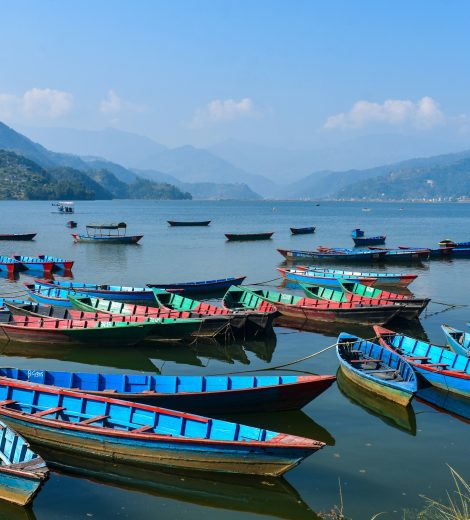
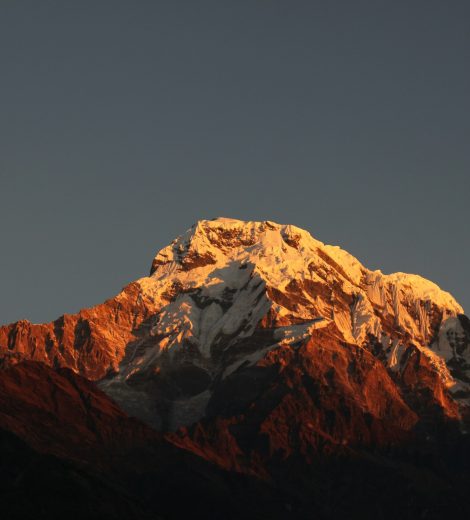
Pokhara is Nepal’s lakeside town, set at around 800 metres on the shore of Phewa Lake with the peaks of the Annapurna range rising close above it. The best things to do in Pokhara mix gentle and active: rowing on the lake, watching sunrise from Sarangkot, walking up to the World Peace Pagoda, and setting off on some of the most popular treks in the Himalaya. This Pokhara travel guide also covers the best time to visit Pokhara and how it fits into a trip around Nepal.
Why visit Pokhara?
Few towns sit so close to such high mountains. On a clear day the snow peaks of the Annapurna range, including the sharp, fishtail-shaped summit of Machhapuchhre, seem to hang right above the lake. The town has a relaxed, unhurried feel after the traffic of Kathmandu, with lakeside paths, cafés and boats drawn up on the shore.
Pokhara is also the main gateway to the Annapurna region. Trekkers come and go through the town, and even if you are not trekking, short walks and drives into the surrounding hills bring you into villages, terraced fields and forest with mountain views at every turn.
Things to do in Pokhara
Phewa Lake and Tal Barahi
Phewa Lake is the heart of Pokhara. Hire a colourful wooden boat, with or without a boatman, and row out across the calm water, where on still mornings the mountains are reflected on the surface. On a small island in the lake stands the Tal Barahi temple, a two-tiered pagoda dedicated to a form of the goddess Durga, reached by boat. The lakeside area, known as Lakeside, is where most visitors stay, with easy walks along the shore.
Sunrise at Sarangkot
Sarangkot is a hilltop above the northern side of the lake and the classic place to watch sunrise over the Himalaya. You drive up in the dark and climb the last stretch on foot, then watch the first light catch Dhaulagiri, the Annapurnas and Machhapuchhre in turn while the valley below is still in shadow. Sarangkot is also the main launch point for paragliding, and on clear days the sky above the lake fills with gliders.
The World Peace Pagoda
On a forested ridge on the southern side of Phewa Lake stands the World Peace Pagoda, a white Buddhist stupa built by Japanese Buddhist monks as one of a series of peace pagodas around the world. You can reach it by a boat across the lake and a walk uphill through the forest, or by road. From the top there are wide views across the lake and town to the Annapurna range.
Caves, waterfalls and the mountain museum
South of the town, Devi’s Falls is a waterfall where the outflow of Phewa Lake drops into a deep gorge and disappears underground. Across the road, the Gupteshwor Cave contains a Hindu shrine to Shiva. The International Mountain Museum tells the story of the Himalaya, its peoples and the history of mountaineering, and is a good introduction before a trek.
Begnas Lake and the hills
For a quieter side of the valley, head east to Begnas Lake, smaller and calmer than Phewa, surrounded by fish ponds, rice fields and forested hills. Short hikes from Pokhara lead to villages on the surrounding ridges, where you can see daily rural life with the mountains behind.
Gateway to Annapurna treks
Pokhara is the starting and finishing point for many treks in the Annapurna region. Shorter routes, such as the trek to the viewpoint of Poon Hill above Ghorepani, take a few days and suit fit walkers with no high-altitude experience. Longer treks go to Annapurna Base Camp, deep in a ring of peaks, or around the Annapurna Circuit, which crosses a high pass. Mardi Himal is a quieter ridge route with close views of Machhapuchhre.
Trekking in the Annapurna region needs permits, and the rules, including whether you must walk with a licensed guide, change from time to time. We arrange the permits and confirm the current rules when we book your trip. On the higher routes, plan an acclimatisation pace and speak to a doctor before you go if you have health concerns.
Best time to visit Pokhara
The best time to visit Pokhara is in autumn, from October to November, when skies are clear and mountain views are sharp. Spring, from March to May, is also popular, with warm days and rhododendrons in bloom in the hills, though haze can soften the views. The monsoon, from June to September, brings heavy rain and cloud that often hides the peaks.
| Months | What to expect | Best for |
|---|---|---|
| October to November | Clear, dry skies and mild days; the best mountain views | Sarangkot sunrise, boating, trekking |
| December to February | Dry and sunny, with cool mornings and cold nights in the hills | Lake walks, short treks at lower altitude |
| March to May | Warm days, rhododendrons in bloom, some haze | Trekking, paragliding, hill walks |
How long to stay and how it fits a trip
Allow two or three nights in Pokhara for the lake, a sunrise at Sarangkot, the World Peace Pagoda and the sights south of town. Add the days for a trek: about four to five days for Poon Hill, or a week or more for Annapurna Base Camp.
Pokhara fits naturally into a first trip to Nepal. The flight from Kathmandu takes about 25 minutes, with mountain views on a clear day, and the drive takes about six to seven hours. A classic route combines Kathmandu, Pokhara and Chitwan National Park, about five hours away by road, for jungle walks and wildlife, though sightings depend on luck and season. If you would like to see the world’s highest mountain, add a trek or a flight in the Everest region.
Tips for visiting Pokhara
- Start early for mountain views; cloud often builds up by late morning.
- Wear a life jacket on the lake and choose licensed operators for paragliding.
- Remove shoes at temples and walk clockwise around stupas.
- Bring warm layers for sunrise at Sarangkot, even in spring.
Highlights
- Rowing a wooden boat across Phewa Lake
- The island temple of Tal Barahi
- Sunrise over Machhapuchhre and the Annapurnas from Sarangkot
- The World Peace Pagoda on its ridge above the lake
- Paragliding from Sarangkot on clear days
- Devi’s Falls and the Gupteshwor Cave
- Mountain history at the International Mountain Museum
- Starting a trek in the Annapurna region
When to go & practical information
Best months: March, April, October, November
Recommended stay: 2–3 nights, plus days for a trek


Plan your trip to Pokhara
Tell us when you would like to go and what draws you to Pokhara. We will suggest a route that fits.
Plan My TripFAQs about Pokhara
Have more questions? Contact us.
October and November are the best months, with clear skies and sharp views of the Annapurnas. March to May is also good, with rhododendrons in the hills but more haze. The monsoon, from June to September, brings heavy rain and cloud.
Two to three nights is enough for Phewa Lake, Sarangkot at sunrise, the World Peace Pagoda and the sights south of town. If you plan to trek, add four to five days for a short route such as Poon Hill, or longer for Annapurna Base Camp.
The flight from Kathmandu takes about 25 minutes, and the drive takes about six to seven hours. Pokhara is also about five hours by road from Chitwan, which makes it easy to combine the two.
Yes, treks in the Annapurna region need permits. The rules, including whether a licensed guide is required, change from time to time. We arrange the permits and confirm the current rules when we book your trip.
On clear days the Annapurna range and Machhapuchhre are visible right from the lakeside. The best views come early in the morning, especially from Sarangkot or the World Peace Pagoda. Cloud often builds later in the day, and the monsoon months can hide the peaks for days.
Yes. Boating on the lake, gentle walks, the caves and waterfalls, and short drives to viewpoints suit all ages. You can enjoy the mountains from Pokhara without walking far at all.