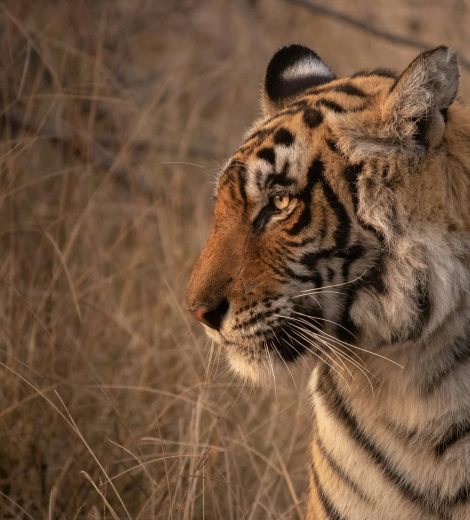

Ranthambore
Ranthambore National Park is one of the best-known places in India to look for wild tigers, with an ancient hilltop fort, lakes and ruins scattered through the forest.
Ranthambore is where many travellers see their first wild tiger, and this Ranthambore travel guide explains how to plan your safaris and what else there is to see. The national park lies in eastern Rajasthan, near the town of Sawai Madhopur, where the Aravalli and Vindhya hill ranges meet. Once a hunting ground of the maharajas of Jaipur, it is now one of the best-known tiger reserves in India. What makes it special is the setting: tigers walk past crumbling pavilions, lakes and the walls of a fort that has watched over the forest for around a thousand years.
Things to do in Ranthambore
Most visits revolve around game drives, but the fort and the countryside around the park are well worth a few hours of your time.
Tiger safaris in the national park
Safaris run twice a day, in the early morning and the late afternoon, when animals are most active. You travel in a small open jeep or a larger open vehicle called a canter, with a driver and a naturalist guide. The park is divided into zones, and each vehicle follows the tracks of its assigned zone. Places are limited and are booked in advance through the official system, and the rules change from time to time, so we arrange the bookings and confirm the current arrangements when we plan your trip.
The landscape is varied: dry deciduous forest, open grassland, rocky ridges and lakes. Tigers are the main draw, and Ranthambore is known for animals that are often active in daylight. Still, they are wild, and sightings depend on luck and season. Taking several safaris over two or three days gives you the best chance.
Other wildlife and birds
A safari here is never just about tigers. Sambar deer, spotted deer and nilgai, the large antelope of the Indian plains, are common. Langur monkeys call from the trees, wild boar root along the tracks, and marsh crocodiles bask by the lakes. Leopards and sloth bears live here too, usually in the rockier areas, though they are seen less often. Birdwatchers will enjoy kingfishers, storks, herons, eagles and colourful smaller species such as bee-eaters and parakeets.
The lakes and ruins
Several lakes lie at the foot of the fort, including Padam Talao, Rajbagh Talao and Malik Talao. Old hunting pavilions, arches and walls stand at the water’s edge, and the scene of deer grazing beside a ruined palace, with a tiger perhaps resting in the shade, is the classic Ranthambore view. These lakes fall within particular zones, so whether you see them depends on which zones you are allotted.
Ranthambore Fort
Ranthambore Fort sits on a high ridge inside the park, with walls that follow the edge of the cliffs. It is one of the six Hill Forts of Rajasthan that together form a UNESCO World Heritage Site. A climb through its gateways leads to temples, step-wells, tanks and the ruins of palaces, with wide views over the forest and lakes below. Inside the fort is a much-loved temple to Ganesh, visited by pilgrims from across the region, so remove your shoes and dress modestly. Monkeys and the occasional glimpse of wildlife are part of the walk.
Life around the park
Beyond the park boundary, Sawai Madhopur and the surrounding villages give a sense of rural Rajasthan, with farms, women in bright saris carrying water and cattle on the roads. Local craft cooperatives sell textiles and block prints, and some lodges can arrange village walks with a guide. The pace between safaris is relaxed: many travellers spend the middle of the day reading by a pool or watching birds in the lodge gardens.
Best time to visit Ranthambore
The best time to visit Ranthambore is from October to April, when mornings are cool and the weather is comfortable for long hours in an open vehicle. The hot months can bring good sightings at water, while the monsoon usually means the core zones close. Season dates are set by the park authorities and can change, so we confirm them for your trip.
| Months | What to expect | Best for |
|---|---|---|
| October to February | Pleasant days and cold early mornings, green forest after the rains | Comfortable safaris, birdwatching, visiting the fort |
| March to June | Warm, then very hot, with dry forest and thinning cover | Wildlife gathering at lakes and waterholes, for those who cope well with heat |
| July to September | Monsoon rains; core zones usually closed | Green landscapes and the fort; limited safari options |
How long to stay and how Ranthambore fits a trip
Two to three nights is ideal. That allows three or four safaris, a morning at the fort and some time to rest. One night with two safaris is possible if you are short of time, but it leaves much more to chance.
Ranthambore sits neatly within the classic Golden Triangle of Delhi, Agra and Jaipur. Sawai Madhopur is on the main railway line between Delhi and Mumbai, so you can arrive by train from Delhi in about five hours on faster services, or from Jaipur in about two to three hours. By road, Jaipur is about three to four hours away, and Agra a little further. A two-week trip might run from Delhi to Agra, then to Ranthambore and Jaipur, before continuing to Udaipur or Jodhpur.
If wildlife is a priority, Ranthambore can also be paired with other tiger reserves in central India, or with the national parks of Nepal such as Chitwan, for a contrast of forest types and species.
Tips for your safaris
- Dress in layers: winter mornings in an open vehicle are cold, and afternoons warm up quickly.
- Choose muted colours: greens, browns and khaki blend in better than bright clothing.
- Bring a scarf: the tracks are dusty, and a scarf or mask helps.
- Pack binoculars: they make a big difference for birds and distant animals.
- Be patient and quiet: follow your guide’s instructions and never ask the driver to leave the track.
- Carry your ID: safari bookings are linked to your passport details, which may be checked at the gate.
Highlights
- Open-vehicle safaris through dry forest, grassland and rocky hills
- The chance of seeing a wild tiger, with luck on your side
- Leopards, sloth bears, sambar deer and marsh crocodiles
- Ruined pavilions and old walls along the park’s lakes
- The ancient Ranthambore Fort high on its ridge
- The Ganesh temple inside the fort, still a living place of worship
- Kingfishers, eagles, storks and many other birds
- Easy to combine with Jaipur, Agra and Delhi
When to go & practical information
Best months: October, November, December, January, February, March, April
Recommended stay: 2–3 nights



Plan your trip to Ranthambore
Tell us when you would like to go and what draws you to Ranthambore. We will suggest a route that fits.
Plan My TripFAQs about Ranthambore
Have more questions? Contact us.
October to April is the main season, with pleasant mornings and green, then golden, forest. From April to June it is very hot, but animals gather at water and sightings can be good if you can cope with the heat. The core zones usually close during the monsoon, so we confirm the current season dates when we book.
Two to three nights is ideal. That allows three or four safaris, which gives you a much better chance of seeing a tiger than a single drive, plus time to visit the fort. A shorter stay of one night with two safaris is possible but leaves less to chance.
No. Ranthambore is one of the better places in India to see tigers, but they are wild animals and sightings depend on luck, season and the zone you visit. Even without a tiger, the park’s landscapes, ruins, birds and other wildlife make a safari worthwhile.
Safaris run in morning and afternoon sessions in small open jeeps or larger open vehicles called canters, each assigned to a set zone. Places are limited and booked in advance through the park’s official system, and the rules change from time to time. We arrange the bookings and confirm the current arrangements for your dates.
The nearest town is Sawai Madhopur, which is on the main rail line between Delhi and Mumbai. Trains from Jaipur take about two to three hours, and from Delhi about five hours on faster services. By road it is about three to four hours from Jaipur.
Older children often love it, though safaris mean early starts, bumpy tracks and several hours sitting in an open vehicle. Park rules on minimum ages and vehicle types can change, so we check them before booking. Many lodges have pools and gardens for relaxing between drives.