
Jodhpur
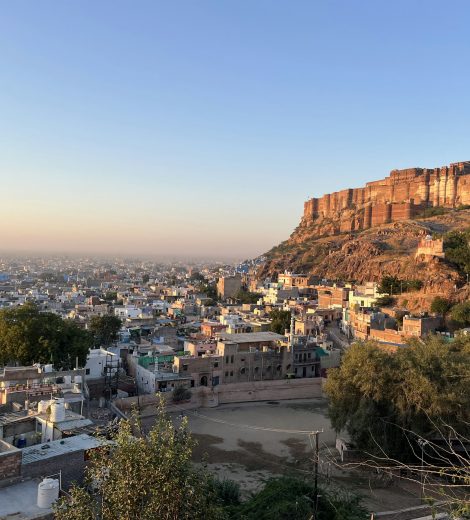
Jodhpur, the Blue City of Rajasthan in India, spreads in a wash of indigo houses beneath Mehrangarh, one of the mightiest forts in the country, on the edge of the Thar Desert.
Jodhpur rises from the plains of western Rajasthan, on the edge of the Thar Desert, and its great fort is visible for miles. This Jodhpur travel guide covers the things to do in Jodhpur, from the palaces inside Mehrangarh to the blue-washed lanes of the old city below. Rao Jodha, a ruler of the Rathore clan, founded the city in the fifteenth century as the capital of Marwar, and it grew rich on the caravan trade across the desert. Today it is a large modern city, yet its old centre still feels like a market town. It is one of the most rewarding stops on a trip to India.
What to see in Jodhpur
Most sights are close together around the fort and the old city, so Jodhpur is easy to explore in a day or two.
Mehrangarh Fort
Mehrangarh stands on a rocky hill high above the city, with walls that seem to grow out of the rock. Rao Jodha began it in the fifteenth century, and later rulers added palaces with carved sandstone screens, painted rooms and mirrored halls. The fort is now a museum, with fine collections of royal palanquins, howdahs, arms, paintings and textiles. The gateways still carry the marks of old battles and the handprints of royal widows. From the ramparts you look straight down over the blue houses of the old city. Allow at least half a day.
Jaswant Thada
A short walk or drive from the fort, Jaswant Thada is a white marble cenotaph built in the late nineteenth century in memory of a Maharaja of Jodhpur. Thin sheets of marble glow in the sun, and the small garden and lake around it are calm, with good views back towards Mehrangarh.
The old city and the clock tower
Below the fort, the old city is a maze of narrow lanes, temples and blue-painted houses. At its centre, the clock tower stands over Sardar Market, where stalls sell spices, textiles, bangles and silver. It is a good place to try local snacks, such as fried chilli fritters, and a walk with your guide shows you corners you would not find alone.
Toorji ka Jhalra
This eighteenth-century step-well in the old city has been carefully restored. Its deep, carved steps lead down to the water, and it is a reminder of how important water storage has always been in the desert.
Umaid Bhawan Palace
On a hill across the city, Umaid Bhawan was built in the first half of the twentieth century for the Maharaja of Jodhpur, in a style that mixes Indian and Art Deco influences. Part of it is still the royal residence, and part is a museum where you can see clocks, photographs and royal belongings.
Mandore and the countryside
North of the city, the gardens of Mandore hold the memorials of the rulers of Marwar, set among temples and trees, on the site of an older capital. South of Jodhpur, villages of the Bishnoi community are known for their care of wildlife and trees. A village visit offers a glimpse of rural desert life, crafts such as weaving and pottery, and, with luck, antelope in the fields nearby.
The character of Jodhpur
Jodhpur is smaller and more relaxed than Jaipur. Life in the old city moves at its own pace, with cows in the lanes, tea stalls and rooftops that look up at the fort. The food reflects the desert, with rich curries, breads and sweets. The city is also known for its textiles and for the riding breeches named after it.
Best time to visit Jodhpur
The best time to visit Jodhpur is from October to March, when days are warm and sunny and nights are cool. Summer on the edge of the desert is extremely hot, and the monsoon brings little rain.
| Months | What to expect | Best for |
|---|---|---|
| October to March | Warm, sunny days and cool to cold nights, especially in December and January | Mehrangarh, old city walks, village visits |
| April to June | Extremely hot and dry | Short visits with early starts only |
| July to September | Monsoon: humid, with occasional showers | Fewer visitors and greener countryside |
How long to stay and how Jodhpur fits a trip
Two nights is ideal: a full day for the fort, the cenotaph and the old city, and time for markets or the countryside. Jodhpur has an airport with flights to Delhi and Mumbai, and good rail links.
The city sits at the heart of a classic Rajasthan route. Jaipur is about five to six hours east by road. Jaisalmer, the golden fort city in the Thar Desert, is about five hours west. Udaipur is most of a day to the south, and the drive is worth breaking at the Jain temple of Ranakpur, carved from pale marble in the fifteenth century, or at Kumbhalgarh, a hill fort with very long walls. For a first trip, many travellers add Rajasthan to Delhi and Agra.
- 10 days: Delhi, Agra, Jaipur and Jodhpur, flying back to Delhi.
- 2 weeks: the Golden Triangle, then Jodhpur, Ranakpur and Udaipur.
- 2 to 3 weeks: add Jaisalmer and the Thar Desert between Jodhpur and Udaipur.
Tips for visiting Jodhpur
- Visit Mehrangarh early, while the air is cool and the light is soft on the walls.
- Wear good shoes. The paths up to the fort and the old city lanes are steep and uneven.
- Some monuments close one day a week. We plan around it, and confirm current ticketing when we book.
- At temples, shoes come off, and at Jain temples leather items may not be allowed.
We plan every trip around you, with your own guide and driver where it helps. Start on our plan your trip page.
Highlights
- The towering walls and carved palaces of Mehrangarh Fort
- Views over the blue houses of the old city from the fort ramparts
- The white marble cenotaph of Jaswant Thada
- Spices, textiles and street snacks around the clock tower market
- The restored step-well of Toorji ka Jhalra in the old city
- Umaid Bhawan, a twentieth-century palace with a royal museum
- Village visits among the Bishnoi communities outside the city
- The Jain temple of Ranakpur on the road to Udaipur
When to go & practical information
Best months: October, November, December, January, February, March
Recommended stay: 2 nights

Plan your trip to Jodhpur
Tell us when you would like to go and what draws you to Jodhpur. We will suggest a route that fits.
Plan My TripFAQs about Jodhpur
Have more questions? Contact us.
October to March is the best time, with warm, sunny days and cool nights. December and January nights can be cold on the edge of the desert. April to June is extremely hot, and the monsoon from about July to September brings only light, irregular rain here.
Two nights is ideal. That gives you a full day for Mehrangarh, Jaswant Thada and the old city, plus time for the markets or a village visit. One night is possible if you are travelling between Jaisalmer and Udaipur, but it feels rushed.
Many houses in the old city below the fort are painted in shades of blue. Various explanations are given, from tradition to keeping homes cool, and no single answer is certain. The best views are from the ramparts of Mehrangarh.
The drive to Udaipur takes most of a day. It is worth breaking it at the marble Jain temple of Ranakpur, and travellers with more time can stop at the hill fort of Kumbhalgarh. At Jain temples, shoes come off and leather items may not be allowed inside.
Yes, and it is a natural pairing. Jaisalmer is about five hours west by road across the Thar Desert, and there are also trains. Many travellers go on to Jaisalmer for the desert and its golden fort, then return through Jodhpur on the way to Udaipur.
Most are open daily, but some monuments and museums close one day a week, and ticketing rules change. We plan your sightseeing around closures and confirm the current arrangements when we book.