Bhutan in Depth: Paro to Bumthang

Overview
- Duration: 12 days / 11 nights
- Departures: Private, any date
- Group size: Private, from 1 traveller
- Accommodation: Comfortable 3★ hotels and family-run lodges, with 4–5★ upgrades in Paro, Thimphu and Punakha on request
- Country: Bhutan
Travel across Bhutan from Paro and Thimphu over the high passes to the glacial valley of Phobjikha and the old temples of Bumthang, returning west through Punakha for the climb to Tiger’s Nest.
This trip suits travellers who want to go beyond the western valleys of Bhutan and see how the country changes as you head east. It works for curious couples, solo travellers and families with teenagers who are comfortable with long days in the car and some walking at altitude.
You begin in Paro and Thimphu, then cross the Dochula pass to Punakha, with its great dzong at the meeting of two rivers. From there the road climbs to the Phobjikha valley, wide and quiet, before crossing the Pele La to Trongsa and on to Bumthang, the cluster of valleys where some of the oldest temples in Bhutan stand. You return west in time for the hike to Tiger’s Nest on your last full day, when you are well used to the altitude.
Full board is usual in Bhutan, and you travel with your own licensed guide and driver throughout. A few honest notes:
- Long drives: mountain roads make the days to and from Bumthang long, about seven to nine hours.
- Altitude: most nights are between about 1,300 and 2,900 metres, with passes above 3,000 metres.
- Licensed travel: visits are arranged through licensed operators and a daily Sustainable Development Fee applies; rules change, and we confirm them when we book.
- Weather: flights into Paro, and any domestic flight, depend on mountain weather.
We can add a festival, a day hike, a stay in a farmhouse, or the domestic flight back from Bumthang. Tell us your interests and dates and we will plan around you.
Day-by-day itinerary
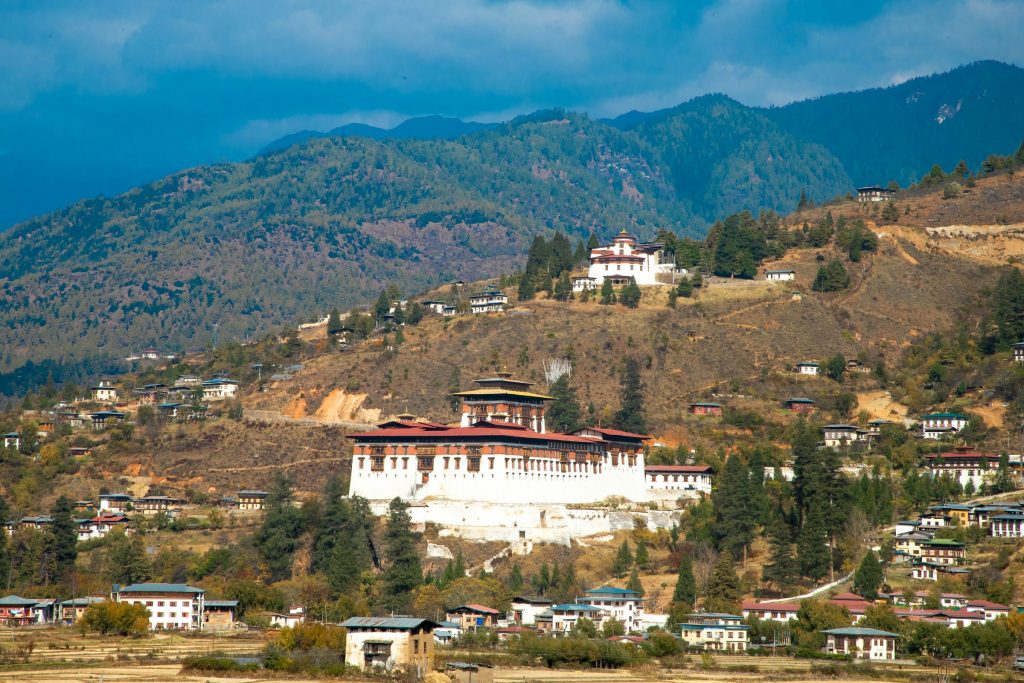
Your flight drops into the Paro valley between forested ridges, and your licensed guide and driver are waiting outside the small terminal. After lunch, take things slowly at around 2,200 metres. Walk up to Rinpung Dzong, the fortress-monastery above the river, and cross the old covered bridge beneath it. In the late afternoon, visit Kyichu Lhakhang, one of the oldest temples in the country.
Overnight: Paro · Meals: Lunch, Dinner
Follow the river for about an hour to Thimphu, the small capital, where traffic is still directed by hand at the main junction. See the Memorial Chorten, where older residents circle and spin prayer wheels, then the huge seated Buddha Dordenma above the valley. In the afternoon, visit the takin preserve and the school of traditional arts, and end at Tashichho Dzong if visiting is permitted that day.
Overnight: Thimphu · Meals: Breakfast, Lunch, Dinner
Climb to the Dochula pass, at around 3,100 metres, with its 108 chortens and, on a clear morning, a long line of snow peaks to the north. Descend through forest to the warmer Punakha valley, about three hours in all. After lunch, walk through rice paddies to Chimi Lhakhang, the fertility temple linked to the Divine Madman, a much-loved figure in Bhutanese folklore.
Overnight: Punakha · Meals: Breakfast, Lunch, Dinner
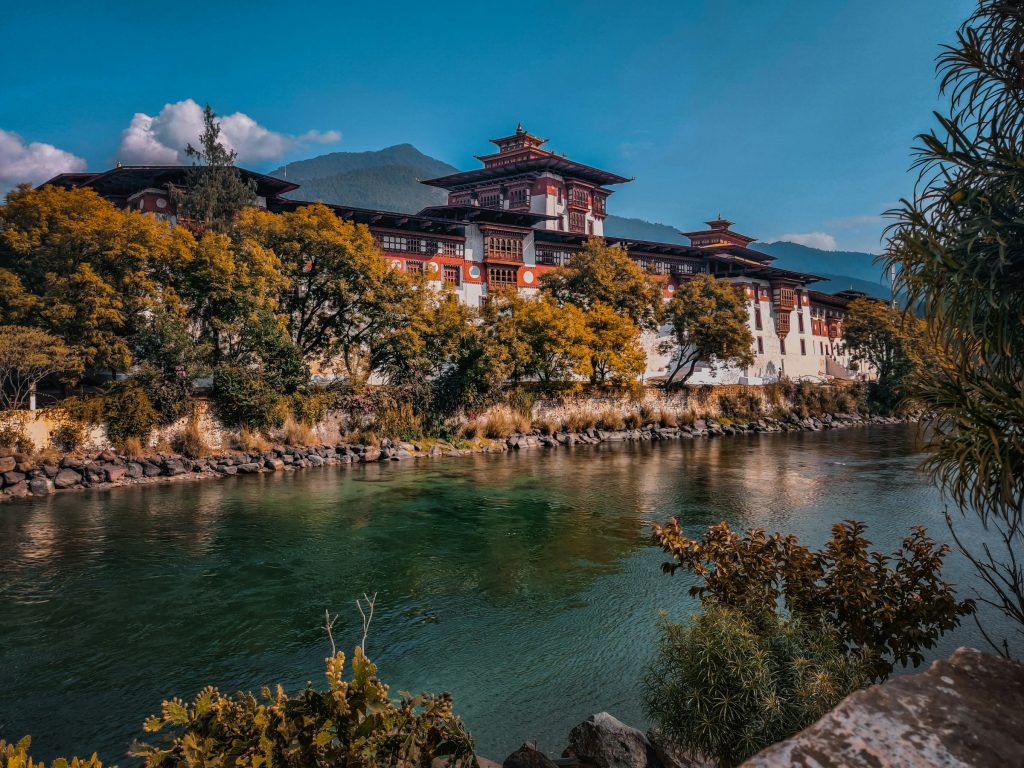
Spend the morning at Punakha Dzong, set where two rivers meet and widely regarded as one of the most beautiful dzongs in the country. Then drive about three hours up into the hills to the Phobjikha valley, a wide, open glacial valley at around 2,900 metres. Its marshy floor is a winter home for black-necked cranes, which usually arrive in late autumn.
Overnight: Phobjikha valley · Meals: Breakfast, Lunch, Dinner
Visit Gangtey Goenpa, the monastery on a low hill overlooking the valley, then follow the gentle nature trail down through pine woods and across the valley floor, with wide views of farmhouses and potato fields. In crane season, the visitor centre explains their story, and you may see them feeding in the marsh. Sightings depend on season and luck. Evenings here are quiet and cool.
Overnight: Phobjikha valley · Meals: Breakfast, Lunch, Dinner
A long day of about seven hours by road crosses the Pele La pass, at around 3,400 metres, the traditional divide between west and central Bhutan. Stop at Trongsa to see its dzong, which stretches along a ridge above a deep gorge, and the watchtower museum above it. Continue over the Yotong La to Bumthang, at around 2,600 metres, arriving in the early evening.
Overnight: Bumthang · Meals: Breakfast, Lunch, Dinner
Bumthang is rich in early Buddhist sites. Visit Jambay Lhakhang, said to date from the seventh century, and Kurjey Lhakhang, where a rock is believed to bear the body print of Guru Rinpoche. Walk across the river by footbridge to Tamshing Lhakhang, with its old wall paintings, then visit Jakar Dzong above the town. Try local buckwheat dishes at dinner.
Overnight: Bumthang · Meals: Breakfast, Lunch, Dinner
Drive into the quieter Tang valley to Mebar Tsho, the Burning Lake, a deep pool in the river gorge linked to the legend of the saint Pema Lingpa. It is a sacred place, so your guide explains how to behave there. Continue to a village in the valley and see how farming families live, perhaps visiting a traditional house. Return to Jakar for a free late afternoon.
Overnight: Bumthang · Meals: Breakfast, Lunch, Dinner
Today you retrace the mountain road west, a long drive of about eight to nine hours with breaks for tea, lunch and leg stretches at the passes. The scenery shifts from fir forest to rhododendron to the warmer, terraced lands of the Punakha valley. When it operates, a short domestic flight to Paro can replace this drive; ask us when you plan.
Overnight: Punakha · Meals: Breakfast, Lunch, Dinner
Drive back over the Dochula pass to Paro, about four hours with stops. In the afternoon, visit the National Museum in the old round watchtower above the valley, then explore the ruins of Drukgyel Dzong, which once guarded the route north. Spend the evening with a hot stone bath at a farmhouse, a Bhutanese custom, if you would like to try one.
Overnight: Paro · Meals: Breakfast, Lunch, Dinner
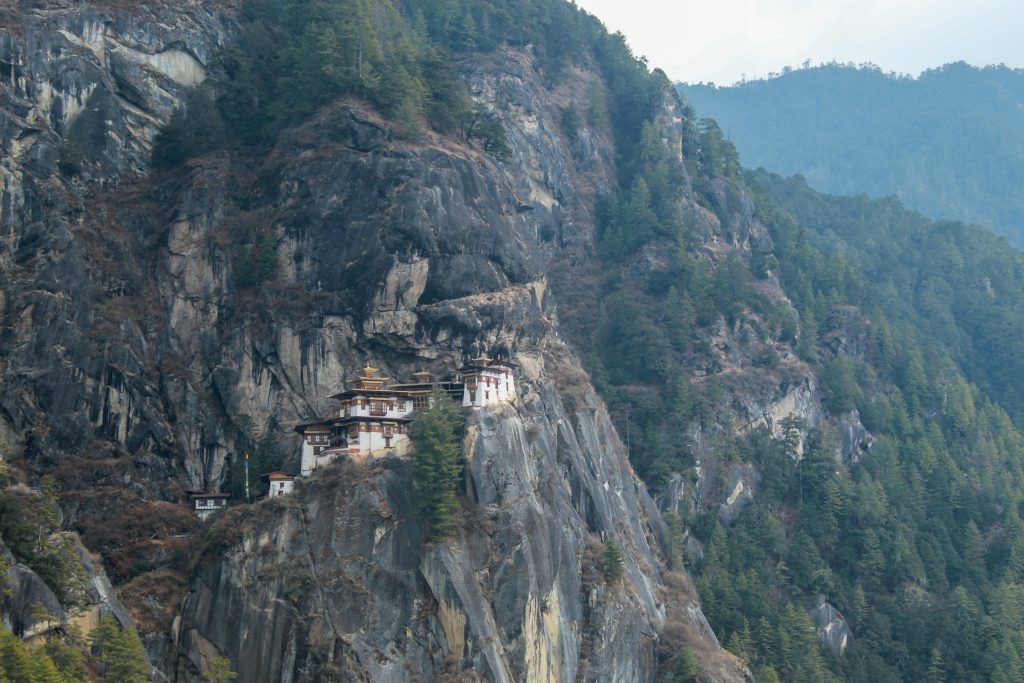
Your final full day brings the hike to Taktsang, the Tiger’s Nest monastery, which clings to a cliff high above the valley floor. The path climbs steadily through blue pine, with prayer flags strung between the trees and a teahouse about halfway. Allow about five hours or more for the round trip. After ten days at altitude, the climb should feel easier than you expect.
Overnight: Paro · Meals: Breakfast, Lunch, Dinner
After breakfast, your guide and driver accompany you to Paro airport for your flight out of Bhutan. Mountain weather can delay flights here, so we plan onward connections with a comfortable margin. Say goodbye to your guide, who by now knows your pace and your favourite dishes. End of your trip.
Overnight: — · Meals: Breakfast
What’s included
- Accommodation with full board (breakfast, lunch and dinner), as is usual in Bhutan
- Licensed English-speaking guide throughout
- Private car and driver throughout
- Airport transfers in Paro
- Bhutan’s daily Sustainable Development Fee and visa (we arrange them; confirmed in your quote)
- Entrance fees to the sights in the itinerary
- 24/7 support during your trip
Not included
- International flights to and from Paro
- Optional domestic flight from Bumthang to Paro
- Travel insurance
- Drinks with meals
- Tips
- Personal expenses and optional activities, such as a hot stone bath
Good to know
Sample itinerary: we adapt the route, hotels and dates to you and confirm everything in your written quote. Best March–May and September–November; late autumn and winter for cranes at Phobjikha.
You fly in and out of Paro, where flights depend on mountain weather. Within Bhutan you travel by private car with your licensed guide and driver. Roads are winding, so times are long for the distance: Punakha to Phobjikha about three hours, Phobjikha to Bumthang about seven hours, and Bumthang back to Punakha about eight to nine hours. A short domestic flight sometimes replaces the return drive.
Frequently asked questions
Trips to Bhutan are arranged through licensed tour operators, and you travel with a licensed guide and driver. A daily Sustainable Development Fee also applies. Both rules change from time to time, so we confirm the current arrangements and your visa when we book.
Yes, the drives to and from central Bhutan are the longest part of the trip, about seven to nine hours on mountain roads. We break them with stops at passes, temples and villages. If you are prone to car sickness, bring remedies, or ask us about the domestic flight back to Paro.
The cranes usually spend the winter in the valley, roughly from late autumn to late winter, and are gone the rest of the year. Even in season, sightings depend on luck. Phobjikha is worth the visit at any time for its open landscape and monastery.